The Romans made Bazanush, a scion of the royal family, the new Caesar. Realizing the futility of fighting Shahpur, he had a letter written to the Iranian king in which he offered to accept his sovereignty and requested him to stop the war. Shahpur forgave the Romans and agreed to stop the war.
Bazanush went with gifts to thank Shahpur. He was asked to compensate for the destruction he had caused. He asked for a tribute of two hundred thousand Roman dinars thrice a year. He also asked for Nisibis, a Southern province of Kurdistan. Bazanush grudgingly agreed as he knew he would not be able to face the might of the Iranians. In return he asked Shahpur to sign a peace treaty with Rome, to which he agreed. Thereafter Shahpur returned to Istakhra, the capital of Fars.
When the people of Nisibis, who had been converted to Christianity, came to know of the treaty, they were unhappy. They wanted a Christian and not an Iranian ruler. Shahpur sent an army to Nisibis and crushed their revolt. Only after they asked for forgiveness, did Shahpur call off his army.
In the later years of Shahpur’s reign, there were many wars against the Romans. One of the greatest victory of Sasanian army was at the city of Amida in Mesopotamia on the bank of Tigris (now in eastern Turkey) in 259, which was pro-Roman. Shahpur not only led the siege, but fought shoulder to shoulder with his troops. The army hurled powerful projectiles and battery rams to break the city walls, and finally entered the city after seventy three days. After a long and bloody battle Amida surrendered giving a resounding victory to Shahpur. Soon after that, Singara and Bezabde too were captured.
In 362, Roman Caesar Julian attacked Persia. He was wishing to defeat Shahpur and have his brother Hormazd, who had defected to Rome, sit on the Iranian throne as a puppet ruler. Julian entered through Mesopotamia, captured Babylon and Seleucia and stood at the gates of the capital city of Ctesiphon. The Roman and Iranian armies met at the bank of the Euphrates. However, the Romans were not able to pierce the strong Iranian defense. Julian, while retreating, was pierced by a javelin and killed on June 26, 363, at the age of 31.
Emperor Jovian assumed command and immediately attacked the Iranians in 363. However, he was not able to defend himself, against the Iranian army, and soon negotiated for peace. Shahpur granted it at a very heavy price. Many major regions including Armenia, Mesopotamia, Singara, Nisibis, and several fortresses came back in Sasanian hands. The Jovian treaty lasted for thirty years. The subsequent Roman emperor Valens attacked the Iranians, but he too sued for peace, on account of which the two kings divided Armenia between themselves in 377.
Shahpur II had to be very firm against Christian infiltrators who had made inroads into Iran on account of the weakness of several previous Iranian rulers. Shahpur came out firmly against them, and curtailed the activities of several over-zealous Christians. He was enraged at the arrogance and defiance of the Christian bishops and so he ordered the closing down of several Churches. At that time, the Roman emperor Constantine II had recently converted himself to Christianity and so he wrote to Shahpur not to be too harsh towards the Christians.
The long reign and firm hands of Shahpur II enabled a lot of religious stability. The Manichaean movement which had taken a very strong foothold among the Iranian nobility and masses especially during the reign of Shapur I and subsequent kings, was put down very firmly by Shahpur II.
Gold coin of Shahpur II with the Image of a fire altar on the reverse
Shahpur had many Atash Behrams built during his long reign. Many of his coins had the image of a fire altar on the reverse.
The best thing to happen to Iran during the reign of Shapur II was the rise of a very learned and pious Dastur by the name Adarbad Mahraspand, who was the head priest and was responsible for bringing back faith of the people in religion and rituals after undergoing an ordeal. He had molten brass poured over his chest and came out unscathed from it. In this way he had replied to the challenge to Zoroastrianism from the Zurvanites and the newly founded Christian religion. After his ordeal he was regarded as the final word on Zoroastrian orthodoxy.
He was the most notable and prolific of the Pahlavi writers in the andarz “admonitions” style of writing. The maximum number of andarz texts are ascribed to him. His writings and sayings are scattered throughout the Pahlavi literature.
The work of collecting and collating the 21 Avestan Nasks was completed under him. He also composed several Pazand prayers like the 6 Setayāsh, Patet Pashemāni and the Āfrins. The Khordeh Avesta, the daily prayer book of the Zoroastrians, was compiled and collated by him. In course of time he came to be regarded as hu-fravart “a saint”.
Shahpur’s reign was the longest among all Sasanian kings. He minted many gold and copper coins. When he was seventy, he asked his younger brother, Ardeshir II, to occupy the throne till his young son, who would become Shahpur III, grew old enough to become the king. Ardeshir, in the presence of ministers, assured his brother Shahpur that he would hand over the crown, throne, treasures and army to prince Shahpur when he would come of age.
King Shahpur II ruled from 309 to 379 CE, a very long period, almost from his cradle to his grave. In fact, he was crowned even before he was born, by placing the crown on his mother’s belly when she was pregnant.
In his long reign, Shahpur II dealt with ten Roman emperors and fought several battles with the Arabs and the Romans. He established a learning tradition in Iran, which became the foundation for later Islamic and European traditions of learning and medicine. It was on account of his achievements on and off the field, that he achieved the title “Great”. Forty days after Shahpur was born, the child was made to lie on the throne and a crown was suspended over its head. Shahrui, a wise and elderly priest, was appointed his caretaker. He looked after the interests of the child as well as the state in a just manner.
Infant Shahpur with a crown on his head
It is stated that even as a five year old, the young Shahpur started taking interest in the affairs of the state. One evening, in the capital city of Ctesiphon, located to the south of the present city of Baghdad in Iraq, the child heard great commotion and inquired about it. He was told that the people returning home from work had a single bridge to cross the river, and hence the commotion, since everyone was in a hurry to reach home before dark. The child pondered for a moment and then suggested that a second bridge be immediately built from the royal treasury to ease the problem. The priests and noblemen were highly impressed by the child’s wisdom.
Soon the young king was seven and his education in warfare, statesmanship and sports commenced. It took him just a year to complete his training. He ordered that Istakhra be made his capital, so that he could stay in the palace of his glorious ancestors.
The Arabs first started serious inroads into Iran when the boy-emperor Shahpur was very young. They frequently attacked from the south, raided, looted and occupied a considerable part of south-western Iran including Pars and Khuzistan. They, came upto Mesopotamia and had intentions of reaching Ctesiphon. The advisors and ministers of the young emperor were not able to stop them.
Then, in 325, a young sixteen year old Shahpur took things in his hands. He commanded the army and ordered it to crush the Arabs and expel them. He secured a brilliant victory. As he grew up, he successfully continued his onslaught on the Arabs, and soon all Arab occupied territories were liberated.
Later on, once again, Tāyar, the Yemeni king, gathered a huge army and approached Ctesiphon. Shahpur too prepared his army, went to war and forced Tāyar to retreat, who returned to Yemen and shut himself up in a fort. Shahpur and his army followed Tāyar to Yemen, and laid a seize to the fort for a month. It was difficult for Shahpur and his army to get entry into the fort. Just then, the Yemeni princess Mallekah, who happened to be the grand-daughter of Iranian king Narseh, saw Shahpur from the fort and fell in love with him. She asked her attendant to invite him on her behalf, and inform him that one part of her ancestry was Iranian. She promised him help to win the fort.
Princess Mallekah watching king Shahpur II
That night the attendant went to Shahpur and narrated the proposal. He immediately accepted her offer, pledged his commitment to her and sent back a diadem, bracelets and a rich silk chador (head dress).
The next day the young princess went into the fort. She took the store room keys and sent a lot of food and wine to the rooms of all the senior courtiers and army commanders. Then she went to the wine-pourer and asked him to give the stiffest, undiluted wine to king Tāyar in the evening and keep pouring it till he was fast asleep.
At night, as per the plan, all senior noblemen wined and dined and so did the king. Then, under the influence of the wine, all of them fell fast asleep. Mallekah ordered the guards to open the gates of the fort. Shahpur and his army entered without much difficulty. They mercilessly attacked and massacred the Arabs. Tāyar too was killed.
Shahpur was ruthless in his treatment to the defeated. He had his Arab prisoners led in captivity across the desert on a rope threaded through their pierced shoulders. Hence he came to be known among the Arabs by the dreaded name Zu-al-aktāf “One who pierces shoulders”. The jubilant Shahpur returned back to Pars with Mallekah.
In order to keep the Arabs from mounting further attacks, Shahpur II constructed a defensive wall close to the city of Hira, which came to be known as Var-i-Tāzigān “wall of the Arabs” and Khandak-i-Shahpur “the defense of Shahpur”.
Many months passed peacefully and uneventfully. One evening, when Shahpur summoned the astronomers and asked about his future, they told him that as time goes by, many problems would afflict him, but he would be overcome them all.
Shahpur II had to continuously contend with Romans during his long reign. He ruled during the reigns of ten Roman emperors, and fought wars against five of them – Constantine II (337-340), Constantius II (340-361), Julian (361-363), Jovian (363-364) and Valens (364-378). During the course of his reign, Shahpur had to contend with the Roman emperors almost continuously and he fought ten battles against them.
Though Constantine the Great (306-337) had made preparations for war with Shahpur, he died before he could launch the attack. Constantius II attacked Armenia, Nisibis, Mesopotamia and Singara and there were long drawn battles, most of which ended in stalemates.
It must be towards the end of the reign of Constantine II or the early years of Constantius II that the episode of the Shahnameh, in which Shahpur decides to go to Rome in disguise, must have taken place. We are told that Shahpur visited Rome as a trader, taking into confidence his senior ministers, to see how the Caesar administered his army and treasury and whether he was satisfied with his strength and might.
When Shahpur, in disguise, visited the Roman court, there an expelled Iranian cleric recognised his king and told the Caesar that the Iranian trader looked and talked like the Iranian emperor. Shahpur was immediately taken prisoner, sewed up in a thick leather bag made from donkey hide, and kept in a deep dungeon.
The key of the dungeon was handed over to the Queen who entrusted it to her attendant. Luckily, the attendant was of Iranian descent and hence sympathetic towards the Iranian prisoner. She was assigned the task to give him food and water, just enough to keep him alive.
In the meanwhile, the Caesar took opportunity of the absence of the Iranian emperor and attacked Iran. Without a leader, the Iranians were in a very pitiable condition. People fled their houses and went into hiding. Many of them converted to Christianity and sought refuge in the church.
The attendant with the Iranian descent developed a soft corner for the imprisoned Shahpur. She used to cry everyday seeing his pitiable condition and his emaciated body. Shahpur too realized that she was in great pain seeing his condition, as she had developed an attachment to him. One day, when the attendant asked him about his identity, he trusted her and revealed his whole story. The attendant showed readiness to help him in any which way he wanted. Shahpur asked her to get hot milk every night and pour it on the leather sack in which he was sown. This would gradually make the leather soft and he would be able to tear it and break free. The attendant did as she was told and soon enough Shahpur was able to break free from the tight leather casing in which he was bound.
King Shahpur tied up in a bag in a dungeon
Shahpur thereafter asked the attendant to devise a plan whereby they could flee to Iran. The attendant revealed that the following day was a Roman holiday and the Queen and courtiers would go for a feast. She could make arrangements for two horses, some weapons and precious stones and then they can flee at night.
True to her words, she made arrangements as planned, and at night both of them fled Rome. They rode tirelessly for hours without food or rest. Then they took shelter in the house of a sympathetic gardener, introducing themselves as Iranians fleeing the Roman Caesar. The gardener told Shahpur that Iran was in a bad condition, many Iranians had converted to Christianity and everyone was wondering where the emperor had gone. He then started crying for his emperor.
Seeing the gardener’s love for his emperor, Shahpur revealed his identity. The gardener could not believe his good fortune of having the emperor as his house-guest. The next morning the emperor called for the gardener. He requested him to get a barsom (a ritual implement) and a prayer book. With these in hands he swore the gardener to utmost secrecy.
Then Shahpur asked the gardener whether he knew the whereabouts of his senior minister. When the gardener answered in the affirmative, he was asked to get some wax. The emperor imprinted his royal seal on the wax and asked the gardener to cautiously take it to the minister.
The gardener did as he was told. The minister was thrilled to see his emperor’s seal. He inquired with the gardener about the looks and build of the person who gave him the seal. When convinced of the identity, the minister was overjoyed that his emperor was back, and asked him for further instructions. The emperor sent a message to the minister to inform the Commander and ask him to re-gather his army. Soon the news spread that the emperor was returning, and so people started returning to their houses.
The Commander met the emperor in his house, where a makeshift court was held. Shahpur narrated his travails in Rome and his fortunate escape, for which he expressed his gratitude to the Iranian attendant. He further informed them to keep his identity a secret as the Roman Caesar should not know their plans till the minister gets the army ready and they are prepared to launch an attack.
Soon the Minister came with an army of six thousand soldiers. It seemed a small army, but Shahpur was confident of victory as his spies had informed him that the Caesar’s army was scattered all over. Moreover the Roman king was over-confident since he did not perceive threat from any side as he thought that the Iranian emperor was in his custody.
Still Shahpur played it safe. He took three thousand of his best soldiers and marched towards Ctesiphon. He moved only during the night through remote jungles and mountains. One night he attacked the Roman camp and took the Caesar and his men by surprise. More than twelve thousand soldiers were killed. The next day Shahpur sent messages to all the allies of Rome asking them to send tributes to him, as he was their new lord. He then ordered the imprisoned Caesar to be brought to him. The Caesar pleaded for his life. Shahpur reprimanded him for not following the protocol and imprisoning him when he had come as a trader.
The Roman Caeser pleading for his life before King Shahpur II
He still forgave the Caesar on the condition that he return the looted treasures, rebuild whatever he had destroyed in Iran at his own cost and plant all the trees he had cut. He then enchained the Caesar and sent him to prison. The Romans blamed the Caesar for their pitiable conditions. The Iranians on the other hand felt that their emperor’s actions had been vindicated.
Shahpur I was the king from 240 to 271 CE. He was the son and successor of Ardeshir was crowned emperor at Ctesiphon on 20th March, 240 CE. For the first two years, he co-ruled with his father. At the time of coronation, as per the tradition, he gave an admonition in presence of his council of ministers comprising of wise men, elders and priests. He assured the council that he will follow the policies of his father in all matters, including collecting only three percent tax from his people. He continued the conquests and expansion of the empire.
Soon after becoming the king, Shahpur stormed the defenses of the city of Hatra, which had proved to be a bugbear not only to his father but also to Romans. Then he captured the fortress city of Nisibis, followed by Antioch and Carrhae.
In 243 CE, the Roman emperor Gordianus III came with an army of Goth and German soldiers, successfully defeated Shahpur and took control of the cities of Mesopotamia, Nisibis, Antioch and Carrhae.
However, in a later war in 244, Shahpur defeated and killed Gordianus, at Misikhe near Ctesiphon close to the Euphrates river. There he established a city called Firoz-Shahpur “Victorious Shahpur”.
The next Roman Caesar was Philip the Arab (244-253), who was a soldier-emperor. He instigated the provinces upto Kaydafah in North Africa against the Iranians. Then the Caesar and Roman army under the leadership of General Belisarius (Bazanush), set off to attack the Iranians. The Iranian army under commander Kersasp went to defend, and met the Romans at Paluniyah.
Shahpur I and Philip’s armies at Paluniyah
In 252, a bloody battle was fought in which thousands of Romans were killed and seventy thousand were taken prisoners. The Romans were badly defeated. The Caesar of Rome asked for truce by ceding the territories of Armenia and Mesopotamia and paying him five lakh denarii as tax. Shahpur waited at the battle camp till the taxes arrived with several other gifts. However, Philip reneged on the peace treaty and attacked again. Shahpur was prepared for the attack and conclusively defeated him in 253. To celebrate this victory, he established the city of Nishāpur.
Valerian (253-260), the next Roman Caesar, was keen to destroy Shahpur. However he miscalculated the massive might of the Sasanians. After some preliminary victories, Valerian was crushed by Shahpur in 260 in the battle of Edessa. Valerian was captured along with seventy thousand Roman soldiers. Never in the history of Rome, had a Roman emperor been captured alive. It was one of the most humiliating military losses in Roman history. To celebrate this conclusive victory Shahpur built a city called Shahpur-gard close to the site of victory. He also established a city to house the Roman prisoners of wars. The Roman Caesar Valerian was also detained along with the other prisoners.
Roman emperors pleading before Shahpur I’s in a bas-relief at Naksh-i-Rustam
While returning, the Sasanian and Roman armies passed the city of Shustar in the province of Khuzistan, where they had great difficulty in crossing the river Karun. Shahpur in his wisdom asked Valerian to make use of the Roman ingenuity in engineering and wealth from Iranian treasures. He entrusted him the task of building a dam-bridge on the river Karun with the help of the captured soldiers. Shahpur assured him that he will be released once he completed this task. It is said that Valerian took three years and made a beautiful bridge which stands even today and is known as Band-e-Kaisar.
Valerian was kept a prisoner for some time. Even today, in the ruins of the city of Bishāpur lies a place marked Zindān-e-Valerian “Valerian’s prison”. What happened to Valerian in the end is not conclusively known. Some believe, he met with his end in Iran. Others maintain that Valerian was honourably allowed to return to Rome.
Thus Shahpur became the one and only emperor in world history who defeated three successive Roman Caesars, killing one, making another a tributary, and the unprecedented achievement of capturing and taking the third as a prisoner.
High priest Kartir with his inscription on a bas-relief at Nakhsh-i-Rajab
Religion was always given a lot of importance by Ardeshir, and his son Shahpur was no different. The chief Zoroastrian priest during his time was Kartir, who tried to establish standard and uniform Zoroastrian religious laws which were quite strict and stringent. He made an attempt to put in writing the scattered Avesta Nasks. He also tried to establish the superiority of the priests over the rulers. Kartir remained a very influential figure in Sasanian history and remained the religious head for several successive Sasanian kings.
Mithraism was prevalent is Shahpur’s time and was popular among Sasanian and Roman troops. In fact, the movement started in 100 CE and lasted till 400 CE. It was at its zenith during this period and was spread all over Europe into the Balkans, Italy and England.
We come to know from sources other than Firdausi, that in the reign of Shahpur emerged a heretic by the name Māni. He was born in 216 to Iranian parents and believed to have visions since the age of four. He was a good orator, and he claimed to be a prophet. When Māni was about twenty, he had a spiritual vision, and he came forward as a new prophet.
His philosophy was a synthesis of various existing religions like Zoroastrianism, Hinduism, Buddhism and Christianity, and hence not confined by national borders. Initially his teachings were well received. Māni claimed that Hormazd and Ahreman were equals. He identified evil with matter and good with spirit. His dietary laws forbid the eating of animal products. There was an antipathy towards sexual activity. Zoroastrian and Christian priests vehemently opposed his stand. He could not substantiate his arguments in the debates that ensued.
Mani preaching to the masses
Mani was introduced to the king Shapur I by prince Peroz. The king was duly impressed by him and made him an honorary member of the court, where he started to preach his doctrine.
Opposition to Mani’s views grew stronger and at last Shahpur had to advise Mani to leave the country. Mani left Iran for many years, and wandered all over Central Asia, including Syria, Palestine and Egypt. He even went as far east as China. Manichaeism spread towards the east into Spain, Greece, Illyria, Italy and Gaul. So vast was his influence that his works were found extensively in Sogdian, Old Turkish and Chinese. A Turkish king officially endorsed Manichaeism as the state religion.
After the death of Shahpur I in May 272 CE, Mani returned to Iran and was well-received by Shahpur’s successor Hormazd I, but when Hormazd died after a very short reign, his successor, Bahram I, showed strong dislike for Mani. His head priest Kartir tortured Mani and put him to death in 276. Mani’s followers were banned throughout the Iranian Empire, and hence they migrated to the west and south. Mani’s faith continued in the East till about the 17th century CE. Shahpur I has commemorated his victories over the three Roman emperors in one single consolidated rock relief at Nakhsh-i-Rustom, in one of the most majestic and well-preserved reliefs. In fact, this place got its name from this relief where the majestic looking king Shahpur I was mistaken for the great warrior Rustom. Nearby, at Kābā-i-Zardusht, Shahpur I has also left a long description of his conquests which is the first long testament by a Sasanian king.
A bas-relief of Ardeshir (l) cornated by being given the ring of authority by Dastur Tansar/Tosar (r) at Nakhsh-i-Rustam, Shiraz, Iran.
Ardeshir was coronated an emperor in Baghdad in 226 CE. He assumed the title of Shāhān Shah ī Iran “King of kings of Iran.” Later Ardeshir explained, that this high sounding title was not for vanity but to remind him of his duties and responsibilities. The emperor promised to rule justly and protect his subjects. He sent his army all around to ensure allegiance from nearby rulers.
Tabak gave a respectful farewell to Ardavan and consigned his body to the Dakhma. He advised Ardeshir to occupy Ardavan’s palace and take the hand of his young and beautiful daughter in marriage. Ardeshir did accordingly. For two months he stayed in this palace and then proceeded towards Pars. The majority of the Medes and Assyrians joined Ardeshir.
Kurdistan, a neighbouring province, was ruled by Mādig. Ardeshir came to know that he and some other small rulers in the surrounding areas were harassing Iranian people. When warned about this, Mādig rose against Ardeshir. In the battle that ensued, Ardeshir found it harder than expected to overpower him. The battle went on for a day and night in which the Kurds had an upper hand. There were many casualties, especially in the Ardeshir’s army.
At night, the tired king retreated. He saw a fire burning at a distance. He went there to find a few shepherds, where he had some food and rest. In the morning, Ardeshir asked the head of the shepherds whether he could get some place to rest. The shepherd sent an elderly guide who took him to a nearby village. The headman of the village was very kind and went all out to help his king. A few men were sent to the capital to mobilize more troops. Some spies were sent inside the Kurdish territory.
The spies reported that the Kurds were over-confident and had already started celebrating their victory. Ardeshir was happy, as he now had an opportunity to take them off-guard. He took a troop of three thousand eminent warriors and took the Kurds by surprise. He perpetrated Shab-e-khun “attack at night”, killing a few soldiers and taking many as prisoners. After gaining this victory, he gifted wealth to his soldiers, and returned back to Istakhra.
Thereafter in 227 CE, Ardeshir achieved successes at Makran, Seistan and Gorgan, and formally incorporated them into his new empire. The regions of Balk, Margiana and Chorasmia were also annexed by Ardeshir
Ardeshir established the cities of Khorreh–Ardeshir and Shahr-e-Zur. He built beautiful gardens, parks and meadows in all villages and cities. He also had canals dug to facilitate agriculture. He re-started the celebration of festivals like Jashan-e-Sadeh and Jashan-e-Mehrangān.
After becoming the emperor, Ardeshir sent a delegation to the Roman emperor Alexander Severus (222 – 235 CE) asking him to return the provinces near the Aegean sea which once belonged to Iran during the Achaemenian times. Instead of responding positively, the Roman emperor insulted the envoys and imprisoned them, which resulted in a war.
The Roman emperor himself came with an army to Iran. After a long drawn battle, the hostilities ended and the Romans retreated and were pushed out of Mosul city. However, Ardeshir did not emerge conclusively victorious.
After some time, that Ardeshir attacked again and successfully annexed the provinces of Mesopotamia, Carrhae, Nisibis and Hatra.
The Armenian king Khushru, who was supported by the Roman emperor, harassed the Iranians in his kingdom. However, after the defeat of the Romans at the hands of Ardeshir, he too calmed down and accepted the sovereignty of the Iranian emperor, but maintained his independence.
In the east, the Kushans too accepted Ardeshir’s superiority. Thus the king’s authority reached as far as the Indus river. Ardeshir claimed the rightful inheritance of many ancient territories which once belonged to his forefathers, the illustrious Achaemenid empire.
Ardeshir’s queen was the daughter of king Ardavan. Two of her brothers, including the eldest brother Bahman had fled to India and two were taken prisoners. Once Bahman sent a messenger to his sister. Along with the message he also sent some poison, asking his sister to kill her husband for their sake. In the message he instigated his sister saying her husband was responsible for the death of their father, the end of their kingdom, and the pitiable conditions of his brothers.
The sister was moved by the letter and decided to act accordingly. Once when Ardeshir returned from a hunt, she mixed the poison in his drink and gave it to him. Ardeshir, who was protected by the divine powers, was miraculously saved as the glass slipped from his hand and the drink spilt down. Hens which pecked at the drink died immediately. The king immediately realized that the queen had attempted to poison him. The queen started trembling.
Attempt to poison king Ardeshir
The king summoned Gerānmāyeh, who was his chief priest and senior minister, told him about the plot to poison him without revealing the identity of the perpetrator, and asked for his advice. After hearing the king out, Gerānmāyeh declared him that such a traitor should be immediately beheaded. The king immediately ordered the queen to be killed.
The queen was terrified by this pronouncement. She met Gerānmāyeh and revealed to him that she was to be the mother of the king’s child. She requested her life to be spared till an heir to the throne was born. The priest approached the king requesting him to re-consider the punishment. However the angry king was firm and asked the priest to get her killed immediately.
Gerānmāyeh, realising that the king was not in a position to take a proper decision, took the matter in his own hands. He realized how important an heir to the throne was, especially since the king had no other children. He decided to keep the queen alive, at least till she delivered the child.
He took the queen in his palace and gave her a place to stay. He told his wife to be careful that nobody may set an eye on her. Just in case if anybody may doubt his intention or integrity, he cut off his genitals, put it in a box, sealed and put a date on it and gave it to the king for safe keeping, saying that it was an important treasure which he should keep in his treasury.
After nine months a child was born to the queen, who was named Shahpur, which means “son of a king.” He had the royal bearings and looks of the king. For seven years the identity of the child was kept hidden.
Once Gerānmāyeh saw the king in a pensive mood and asked, “Oh great one, what ails you? You have everything a man can desire. Now is your time to rejoice and enjoy life.”
“Yes, my faithful one”, the king responded. “Now, when I am fifty one, and have everything, I long for a son who can succeed me.” The priest realized that this was the right time to reveal the truth about his queen and his son, and replied, “Sire, I am in a position to relieve your grief, if only you grant me my life.”
The king was surprised at this strange request. “What makes you fear for your life, O wise one! Reveal to me what you know and I assure you that no harm will come to you.”
“Sire, then please ask the treasurer to bring back the box I had given you some years back.” Gerānmāyeh requested. The king summoned for the box, and then asked the priest what was inside it. The priest said, “In it is my most cherished possession, my manhood. You had asked me to kill your queen, but since she was carrying your child, I did not follow your orders. I kept her alive in my palace and lest anybody doubt my integrity or intention, or cast aspersions at the legitimacy of the prince’s lineage, I had to take this drastic step.
Your son is now fourteen. I have named him Shahpur. His mother too is with him and looking after him.”
The king rejoiced on hearing this news. He said, “My trusted minister, you have given a big sacrifice for the sake of your king. I do not want to prolong your responsibility. Tomorrow you assemble a hundred children of the same age, height, body and features as my son, make them wear the same dress and let them play polo in a field. I am sure that I would be attracted to my own son and my heart will lead me to him.”
The following day, the minster did exactly as instructed. A hundred children started playing polo in the field. The king immediately recognised his son and asked the minister, who nodded in assent. But the king wanted one further test. He waited till a ball came towards him. He wanted to see whether his son was bold enough to come near him and collect the ball.
King Ardeshir watching the game of Polo
Soon enough, during the course of the game, the ball was struck in the direction of the king. Several boys came running to collect the ball, but stopped short of going near the king. However Shahpur, excused himself, bravely went near the king, collected the ball and brought it back.
After the game, the king’s attendants were asked to summon Shahpur. Ardeshir was extremely happy at being reunited with a son whom he never knew existed. He richly rewarded Gerānmāyeh. He also had coins minted on which he had his own image imprinted on the obverse side and the minister’s bust on the reverse. He also included the minister’s name and seal on all his royal pronouncements.
Ardeshir got his queen and his prince back into the palace and earnestly began the royal education of the prince. He was taught Iranian languages, royal mannerisms, horse riding, weapon wielding and other royal skills. He established a city by the name of Junde-Shahpur to celebrate the reunion with his prince. This city was near Shustar, in the present province of Khszestan in south-west Iran
Soon prince Shahpur became a handsome young man, and a trusted advisor and commander to his father. Meanwhile, emperor Ardeshir who was spending a lot of time in wars, was now weary of them, and wanted to find a way to end them. He asked a fortune teller from India, and was told that his hectic life on the battle field could end only if he gets his son married to his old enemy Mehrak Nushzad’s daughter.
Ardeshir was very angry when he heard this. He was neither willing to forgive his old enemy nor get his daughter married to his son. Instead, he ordered the daughter be killed. When Mehrak’s daughter, who was a very beautiful young lady, came to know about these orders, she fled to a village and sought refuge in the house of the village headman.
Once Ardeshir went on a hunting expedition with Shahpur. After the hunt, Shahpur wandered into a village and went into the house of its chieftain. In the garden there, he saw a beautiful girl drawing water from a well.
Prince Shahpur watching the girl drawing water
Shahpur too wanted water from the well and had gone there with his water-pot. When the girl offered to draw water for him, he declined saying that he will ask his soldier to do so. He ordered a soldier to draw water, but he was not successful. Thereafter several other soldiers tried, but in vain. Shahpur chided them and himself went to draw the water. However, he too was able to draw water with great difficulty. He admired the strength of the beautiful girl and assumed that she must be from a royal family.
The girl then addressed Shahpur by his name, at which the prince was surprised. He asked her how she knew him and she said that she had heard praises of his height, physique and good looks and today saw his strength.
Shahpur asked her identity, to which she replied that she was the village chief’s daughter. Shahpur could not accept this explanation. He told her not to lie to a prince, to which she said that he should assure her that no harm should come to her, only than she could reveal the truth. After the prince’s assurance she revealed her identity.
After some time, with the chieftain’s permission, the two were duly wedded. The wedding was kept a secret from Ardeshir. A child was born to them, who was named Hormazd. His birth was kept hidden and he was rarely allowed to go out. After seven years, when Ardeshir had once gone for a hunt, young Hormazd was out playing polo with his friends. While playing, the ball went near the king. None dared to go near the king except Hormazd. After fetching the ball, he triumphantly proclaimed that he was born to be great. King Ardeshir was surprised and asked the minister to find out the lineage of this child. The minister could not ascertain the lineage and so the king summoned the child.
The child was brought to the king. When he was asked his lineage, he proudly said that his father was prince Shahpur and mother was the daughter of Mehrak Nushzad.
Ardeshir immediately called for Shahpur, who apologized for the secret marriage. The king forgave him and accepted Hormazd. He presented a small golden crown to his grandson and gave away a lot of wealth in charity. He told his subjects that none should ignore the astrologers, since only after the union of Mehrak’s daughter and his son, much against his wish, that good fortune had come to him.
Ardeshir proved to be a very wise ruler. He initiated schemes to recruit youngsters as soldiers, trained them well in every manner and ably rewarded them. He also encouraged the scribes in his court. He also advised his officers to be kind, sympathetic, just and impartial towards the subjects.
Ardeshir abolished the ten percent tax that he had levied in his initial days as king. He had needed that amount to fight wars and establish his power. Now that his power was established, he no more needed that money and he also got regular taxes from his subject nations Rome, China, Tartar, Turkestan and North India.
Ardeshir tried to undo much of the damage done by Alexander the Macedonian. In terms of state, he did it by uniting the fragmented kingdoms, and in terms of religion, he did it by building his empire on the solid foundations of the Zoroastrian religion. He proudly proclaimed on his coins that he was a Mazdayasni, and had descended from the Yazads “divine beings”.
Ardeshir firmly believed that secular power and religion should go hand in hand. This is clearly depicted not only on his coins, but also on the coins minted by most subsequent Sassanian kings, where on the reverse we see a fire-altar flanked by fully armed figures. The armed figures represent the secular power, and the fire represent the religion.
As a thanksgiving for establishment of the Sasanian empire, Ardeshir ordered Atash Behrams to be built at various places like Pars, Parthia, Babylonia, Azarbazan, Isfahan, Rae, Kerman, Sistan, Gurgan and Peshawar. Under Dastur Tansar, he started the work of collecting the 21 Volumes of Avestan texts, known as the 21 Nasks, mainly from the memory of priests.
Emperor Ardeshir, in order to quell the doubts of his subjects about whether religious rituals reach the other world or not, made arrangements to send the soul of a very pious priest Ardā-Virāf (also referred as Ardāe Virāz) to the other world and find out whether heaven and hell really existed and whether rituals reached the souls. Ardā-Virāf was selected from among forty thousand priests to leave his bodily form on the earth. Under ritual conditions his soul visited the other world, met the divine beings and conversed with Ahura Mazda. After returning he had his account written down by scribes, which is available today in the Pahlavi language as the Ardā Virāf Nāmeh “The Book of Ardā-Virāf”.
Shahpur also joined Ardeshir in his military expeditions. They fought many battles against the Romans, and were able to eject them from Mesopotamia and Syria. In fact many coins depict the father and son as co-rulers for about the last ten year’s of Ardeshir’s reign.
Ardeshir ruled as a king for forty years and as an emperor for fourteen years. When he was exhausted he called for his son Shahpur, gave him many admonitions, passed the mantle of kingship to him in 240 CE, and ruled with him for two years. He passed away in February 242 of natural causes. He had requested his son to have his mortal remains placed in the Dakhma after his passing away.
King Ardeshir’s last admonition to his son Shahpur.
Much of Ardeshir’s life and exploits have been recorded in the Pahlavi book Kārnāmak ī Artakshir Pāpakān “The exploits of Ardeshir Pāpakān”. He commissioned several rock reliefs of himself at Nakhsh-e-Rustom, Nakhsh-e-Rajab and Feruzabad.
In Kujārān, a small city near Pars, lived Haftavād (or Haftān-bokht), a poor but contented farmer. He was called so, as he had seven (haft) sons and one daughter. Most girls of that village, including Haftavad’s daughter used to go daily to a nearby mountain with some cotton wool and a spinning wheel, chat, have lunch, spin yarn and enjoy.
One day, as the girls were about to have their lunch, Haftavād’s daughter saw an apple roll down a tree. Excited, she picked it up, wiped it and took a bite. As she was just taking the bite, she saw a worm. She gently removed it and kept it on her spinning wheel. After lunch when she started spinning again, she decided to spin all the cotton she had brought. Playful as she was, she asked the worm on her spinning wheel to help her. To her surprise, she realised that she was able to spin much faster and could get double the yarn than she usually did. When she reached home, she was excited about her achievement and told it to her mother, who too was very happy. The next day, the mother gave her more cotton yarn, which too the little girl finished. The mother kept increasing the quantity of cotton yarn and the girl continued to spin as much as she was given, with time to spare. The young girl was convinced that all this was due to the presence of the worm, however she did not reveal it to anybody. She kept the worm with her and lovingly fed it pieces of apple every morning.
Young girl feeding a worm
The young girl’s parents were surprised by the tremendous output of yarn and one day, in jest, asked her whether she had befriended a fairy who was helping her with her work. It was then that she confided in them about the worm and showed it to them.
Soon Haftavād too prospered in his trade. He attributed it to the good luck brought by the worm. He too started feeding the worm, which became larger and fatter. It assumed a dark brown colour with saffron spots. It had become too big for the spinning wheel, and so a special beautiful wooden case was made for it.
Haftavād’s name and fame started spreading. People from far and wide came to him for guidance and counsel. His entire family became wealthy.
The chieftain of Kujārān started envying Haftavād’s fame. He tried to harass him, but the entire city rallied around Haftavād. Soon there ensued a battle in which the chieftain was defeated and killed. Haftavād became the chief, took charge of the city and built a new fort on the nearby mountain.
The worm kept growing. Soon the wooden case too was small for it and so a huge pond was made on the mountain and the worm was transferred to it. Every morning, an attendant would feed it a pot of rice. Gradually the worm grew bigger. It became so big that its neck and limbs resembled the feet of an elephant. Haftavād was so fond of the worm that he named the fort Kerman, which in Persian means “belonging to the worm.” The girl stayed with the worm all the time and looked after it. Soon it had a retinue of people to attend to its needs. Its food now also included milk and honey.
Feeding the gigantic worm
Haftavād extended his kingdom and also increased the strength of his army. Any enemies that came to take charge of the fort, were defeated on account of the worm’s power. Very soon the fort came to be known as the invincible fort.
Ardeshir came to know of the growing strength and popularity of Haftavād. He did not like the fact that a subordinate king was becoming so powerful. He dispatched an army to defeat him. When the army started its ascent to the fort, suddenly everything turned dark and it was badly defeated. Scores were killed and the rest retreated.
Ardeshir was dejected at his army’s defeat. He assembled more soldiers and this time he himself went along with them. Haftavād was not worried. He summoned his eldest son Shahui, who was enjoying in a faraway place, to take charge of his army.
A fierce battle ensued, at the end of which Ardeshir’s army was tired and depleted. It’s food and supplies were intercepted by the enemy. The tired and hungry soldiers collected near a lake thinking about their next move.
Just then news came that a man by the name Mehrak Nushzād from the city of Jahrom took advantage of the absence of Ardeshir, and led an army to loot the king’s palace. Ardeshir was heartbroken that one of his own Iranians did this. He realized he should not have undertaken this expedition without adequately covering his own palace. He asked the advisors about his next move. They told him to first deal with the enemy in his own palace and then worry about others. Ardeshir decided to return back the following morning. He asked his soldiers to eat whatever they had and enjoy the rest of the day.
Ardeshir renews his efforts
As they were about to begin their meal, an arrow pierced one of the food items. On closer scrutiny they found a message on it. Ardeshir’s priests read out the Pahlavi writings on the arrow, which said, “O noble king, this arrow has come to you from the top of the fort of Kerman. If I had wished I could have pierced your body, but we need a leader like you in these bad times when this fort is protected by a worm.” All the soldiers thanked God for saving the life of their dear king.
That night, Ardeshir thought of nothing but the worm in the fort. The next morning he proceeded to Pars with his remaining soldiers. Just then, the enemy soldiers attacked and slayed many soldiers from the king’s army. The enemies shouted the slogan “Long live the throne of the worm”. Ardeshir, with some of his commanders retreated in haste.
On the way, they came across a small town. A tired Ardeshir was relieved to see a house where two youthful brothers were standing. Introduced themselves as Borz and Borz-ādar, they asked Ardeshir about his identity. He replied that he was a soldier from the king’s army and was retreating from the soldiers of Haftavād. The youths took pity on him and his associates, invited them to their house and fed them. They consoled Ardeshir that sooner or later the evil of Haftavād will be exposed and his rule will come to an end. Ardeshir realized that these youths could be his allies, so he revealed his true identity.
Ardeshir asked the youths if they could help him defeat Haftavād. The youths pledged their allegiance to him and assured him their help. They revealed that the worm was in fact a terrible demon sent by Ahriman, the Evil Spirit, to destroy good people.
A relieved Ardeshir took the youths with him, replenished his army and attacked Mehrak Nushzad who had occupied his palace. In the fight, Nushzad and his entire family was killed, except for a princess who had hidden herself.
Ardeshir now devised a plan to kill the worm. He selected seven capable soldiers and along with the two brothers decided to go to the fort in disguise. He instructed Shahargir, his commander, to wait at a distance, and come to the fort after he gave a signal, a smoke signal during the day and a fire if it was night.
Then, Ardeshir and his trusted men dressed as traders. They prepared ten donkeys and loaded them with trunks containing ornaments, clothes and metal pieces, and set off for the fort. When they reached the fort housing the worm, sixty priests tending the worm intercepted them and demanded to check their trunks. Ardeshir introduced himself as a trader from Khorasan, and said, “I was a poor worker in a village. It is on account of the blessings of the worm that I have become rich. Now I have come to express my gratitude to the worm by serving it.”
The priests were convinced and let him in. He gave precious gifts, rich food and fine wine to the priests who fed the worm. He invited the priests to have wine, but they declined since the priests on duty to feed the worm, were not supposed to have wine.
Ardeshir offered to feed the worm himself, saying, “I have enough milk and rice to feed the worm for three days. This way I will be able to show my gratitude and perhaps become wealthier with the worms blessings. Moreover, you priests have been working very hard. So let me do your duty for now, so that you may enjoy.” The priests agreed to Ardeshir’s request, had lots of wine and became intoxicated.
The worm had become so tall and huge, that in order to feed it, the priests had to climb a special staircase prepared for the purpose, and then pour liquid food into the worm’s mouth from a platform.
Death of the worm
After the priests got inebriated, Ardeshir grabbed the opportunity. He melted pieces of metal, climbed the stairs and fed the hot molten metal to the worm. The worm got burnt from inside, started screaming and fell dead in the pool. Ardeshir’s soldiers killed all the intoxicated priests and guards. The king then sent the smoke signal to Shahrgir, who came to the fort with the army.
Haftavād came to know about the attack and came rushing with his army. Ardeshir ordered Shahrgir to fight fearlessly as the worm which protected Haftavād was dead. Haftavād was soon defeated, taken prisoner along with his eldest son Shahui, and later hanged.
Kerman was taken over by Ardeshir. He re-instated the old king and gave him an army. A fire temple was established in place of the worm’s temple.
In Gujarati, this story is referred to as Kermān no kiro.
After taking over Kerman, Ardehsir subdued the kings of Ahvaz and Isfahan. These developments were viewed with considerable alarm by Ardavan at Ctesiphon.
In 224 CE, Ardeshir openly challenged Ardavan, who summoned his army from Gilan and Dilam. He proceeded towards Istakhra, and intercepted Ardeshir’s army which was on its way to take on Ardavan.
There were three fierce battles which lasted for forty days in which many soldiers from both sides lost lives. In the last battle at Hormuzgān, suddenly a huge storm appeared from nowhere over Ardavan’s army. This was considered a divine sign indicating Ardavan’s end. Soon Ardavan was killed. Two of his sons fled towards India and the other two were imprisoned by Ardeshir. Ardeshir overpowered Ctesiphon, and brought an end to the lineage of Arash, from whom the Arshkanian dynasty descended.
The Sasanian Empire, was founded by Ardeshir / Artakhshīr Bābegān/Pāpakān, referred to as Artaxerxes by the Romans, who had an illustrious ancestry. His maternal grand-father was Bābak and his father was Sāsān.
Ardavan (Gk. Artabanus IV), the last Parthian emperor ruled over a vast kingdom which included Shiraz, Istakhra and Esfahan. Istakhra, situated in the province of Fars, was entrusted to Papak/Bābak a local administrator of royal lineage.
Sāsān was a member of a family which traced its descent from Kayanian and Achaemenian kings. He stayed in Istakhra and eked out his livelihood by tending cattle and looking after camels. When Sāsān was not able to make ends meet, he went to Bābak to seek livelihood. Bābak, struck by his royal looks, immediately appointed him as a care-taker of his horses. Impressed by his sincerity and work, he later promoted him as the supervisor of the royal stables.
Once, on three successive nights, Bābak saw three different dreams. In the first dream, he saw the sun shining over the head of Sāsān, giving light to the whole world. On the second night, Bābak saw Sāsān riding an elephant with a sword in his hand, and people passing by bowing down to him with respect. On the third night, Bābak had another dream in which he saw the three spiritual fires of Ādar Gushasp, Ādar Khordad and Ādar Burzin Meher blazing high in the house of Sāsān, and exuding a sweet fragrance.
Babak’s dream
When Bābak asked his council of wise men to interpret the dreams, he was told that the person in the dream or his immediate descendant was destined to be an emperor.
Bābak summoned Sāsān and inquired about his ancestry. Reluctant on account of fear, Sāsān hesitated, but when Bābak assured him of his safety, he disclosed his royal ancestry. Highly touched by his nobility, Bābak gave Sāsān royal clothes and wealth, gifted him a palace and in due course married him to his daughter Gohar-āfrid.
In 180 CE, Sāsān was blessed with a son, who resembled his royal ancestors. He was named Ardeshir. As Bābak had no child, he raised up Ardeshir as his own son. Later the title Bābekān/Pāpakān was added to his name. He grew up to be a brilliant and brave young man. Soon he attained fame in Pars as an accomplished, virtuous and brave prince, well versed in arts, statecraft and military skills.
Ardavan summons Ardeshir
When Emperor Ardavan heard about Ardeshir, he summoned him to his palace in the capital city of Rae so that he can keep an eye over him, since he feared that a subordinate prince may gain greater power and glory.. As king Bābak was a subordinate of emperor Ardavan, he could not refuse. With a heavy heart, he sent Ardeshir to Ardavan, who kept him along with his own four sons and trained him in arts of warfare. Ardavan, always felt that Ardeshir was far superior then any of his princes, hence he always harboured feelings of insecurity.
Once, when Ardavan went hunting with his princes and Ardeshir, while chasing an onager (asian wild ass, known in Iran as gur-khar), they got separated. Ardeshir, who was the fastest among the lot, shot an arrow piercing the heart of the onager. When Ardavan caught up with them, he saw the skill with which the arrow was shot, and inquired about the identity of the archer. Ardeshir as well as and one of the princes claimed to have shot it. There was a quarrel between the two in which Ardeshir scorned the prince and called him a liar.
Ardavan was angered by Ardeshir’s harsh words and as a punishment sent him to the royal stables and asked him to work and stay there. Ardeshir was greatly pained, as he knew that Ardavan had acted unjustly. His pride was wounded and he started to nurse a grudge against Ardavan. He wrote a letter to his grand-father Bābak about this. After reading the letter, Bābak replied, reprimanding Ardeshir for behaving rudely with the prince. He dispatched the letter along with ten thousand Dinars (gold coins).
Ardeshir felt comforted on receiving the letter, and merrily spent his time in enjoyment. He befriended Gulnar, a royal lady who was the chamber-maid at the king’s palace. Some sources claim that the lady was Arta-dukht, the daughter of Ardavan. Both of them saw each other daily and in due course started sharing sentiments of love and loyalty with each other.
After some time, Bābak passed away in Pars. Ardavan, instead of giving Ardehsir his rightful crown, instituted prince Bahman on the throne. When Ardeshir came to know of this, he was angry since he was the rightful heir. He harboured feelings of resentment and contemplated ways and means to get back the throne which was rightfully his.
On day, in the palace, when Ardavan was consulting soothsayers, he asked them about his future. He was told that a young man from a noble family who was in his service, would flee within three days and take over his throne. Ardavan was shocked on hearing this grim prognostication.
Gulnar had overheard the prophecy of the soothsayers and conveyed it to Ardeshir. When Ardeshir heard about the prediction for the emperor, he realized that it was in consonance with his own plans. It gave him an impetus to flee Rae. He asked Gulnar whether she would help him to flee and accompany him if he fled, to which she readily agreed. At night, Gulnar brought some precious gems, made arrangements for two horses, and the two fled. Ardeshir kept a sword ready for their defense.
Emperor Ardavan was very fond of Gulnar. She used to wake him up every morning. Hence, he noticed the absence of Gulnar in the morning. On inquiring he was told that Gulnar and Ardeshir were not to be found and two horses, one white and the other black, were missing from the stable. Ardavan immediately realized that Gulnar had fled with Ardeshir.
Gulnar and Ardeshir fleeing
Ardavan immediately set off with a few soldiers to look for them. On the way, he inquired whether anybody had seen a man and a woman on a black and a white horse pass by at dawn. He was told that such a couple had indeed passed by and were followed at a distance by a stately white sheep.
Ardavan inquired with his advisors about the white sheep. He was told that it symbolized potential royalty for the young man. If the sheep caught up with the person, it would mean that the person would become a great king and spell doom for Ardavan. A tired Ardavan, took some rest and then resumed his search for Ardeshir.
Ardeshir and Gulnar rode without halting. By afternoon their heads were reeling under the heat of the sun and their throats were parched with thirst. They stopped at a pond in order to take some rest. But before they could alight from their horses, two stately young men approached them, and told them not to get down, as they could not afford to lose a single minute. The duo heeded the advice and started riding ahead, and did not stop till the end of the day.
Ardavan was close behind them. In the evening when he reached a city, he once again inquired about the two. He was told that two such riders were seen moving towards Pars at dusk. They further added that a stately white sheep was swiftly running next to the man’s horse.
On inquiring with his advisor, Ardavan was told that luck was favouring the young man. He was told to ask his son Bahman in Pars, to try and find Ardeshir and not let him have the milk of the sheep, or else he would acquire the Khoreh (divine energy) and then nothing could stop him from being the Emperor of Iran.
Ardavan halted in a nearby city for the night and asked his soldiers to return. He wrote a letter to his son Bahman ruing about the escape of Ardeshir, the grim prognosis, and asked him to act fast.
By night Ardeshir had reached close to Istakhra. A fisherman recognized him on account of his royal looks and stately behavior. He informed the people, who recognized him and rallied round him. Ardeshir addressed them, “My dear people, you know what Alexander had done to our ancestors. When I, a descendant of the Kayanian prince Asfandyar, am alive, there is no reason why Ardavan should rule over us. If you agree with me, I will not allow anybody to occupy the throne.”
The people immediately agreed. A wise man from among them told Ardeshir, “Go ahead and fight Ardavan. You have our support. You may find it difficult. But once you have overpowered him, nobody will dare to stand against you.”
Encouraged by these words, Ardeshir proceeded towards Pars. When Bahman came to know about this, he assembled his army to counter Ardeshir.
Ardeshir got his first supporter and ally in Tabak/ Banāk, the elderly governor of Jarrom city. Initially Ardeshir was doubtful of Tabak’s sincerity as he used to be Ardavan’s supporter. However, later he was convinced of his genuineness.
Very soon more support poured in, and Ardeshir had an army of about fifty thousand young men. He thanked Ahura Mazda for this unexpected help. Assured of support, he proceeded to attack Bahman. However, he did not have to fight, as the king’s army surrendered and opened up the treasury. Ardeshir reached Pars and declared himself king of Pars in 208 CE, and gradually consolidated his position.
From today, we start our series of Serialised Stories of the Sasanian dynasty from the Iranian epic Shahnameh, with historical traditional inputs.
The establishment of the Sasanian Empire opened a brilliant epoch in the history of Iran. The kings of this dynasty restored to a great extent the glory of ancient Iran and revitalized the Zarathushti religion. The province of Pars gained complete independence and its kings, like those during the pre-Achaemenid period, ruled over an empire.
After the downfall of the Achaemenian empire, the Seleucid dynasty of the Greeks ruled over Iran for about eighty years from 330 BC to 247 BC. For five centuries after the downfall of the Seleucid dynasty in Iran, the Parthians/Arshkanians ruled.
However, in the province of Pars, people lived in independent states under the provincial kings. They preserved and practiced their national, ancestral Zoroastrianism religion, without outside influence. Zoroastrian traditions and religion were supreme in Pars and hence the even Greeks could not influence it much. Zoroastrianism was preserved in its pristine form and the sacred books of the Avesta were preserved orally. Thus it was in Pars that the Zoroastrian renaissance commenced.
This renaissance spread throughout the Iranian empire after Ardeshir, the king of Pars, defeated the Median emperor in 226 CE and consolidated his power as the emperor of Iran. Re-gathering of the scattered Avestan Nasks commenced and was accomplished during this period. Reigns of many kings were marked by religious activities like setting up of religious schools and establishing consecrated fires, in spite of the fact that the empire included large populations of other religions too.
Though the Sasanian kingdom was predominantly Zoroastrian, a large part of it, especially in the West, was occupied by the Christians. These regions were often the bone of contention during the wars in the last century of the Sasanian Empire.
The Sasanian era also witnessed vast strides in architecture, learning, the arts and the military. The birth of Prophet Mohammed and the spread of Islam marked the later part of this dynasty.
From tomorrow we start with the story of Ardeshir Bābekān / Pāpakān, the founder of the Sasanian dynasty.
(The abbreviation SSS in the title implies Shahnameh Stories Sasan)
Zoroastrians regard fire with great reverence. They consider it a living, breathing representative of Ahura Mazda and hence figuratively refer to it as “son of Ahura Mazda.”
The Avestan word for fire is ātar, which literally means “heat, motion, energy.” It is derived from root at– “to diminish, to transform.” Heat and motion have the ability to transfer matter into energy.
Myths about fire:
On account of their immense reverence to fire, some myths have plagued to explain its unique place in the Zoroastrian religion:
1. Fire was a tool: Zoroastrians venerated fire as it was a useful tool, valuable weapon, cooked food and gave heat, and also possibly because primitive man was afraid of fire. This is not true as king Hoshang had discovered the effulgence of Ahura Mazda in fire.
2. Fire is just a symbol of the religion: This is not correct as Zoroastrians consider fire as a living, breathing representative of Ahura Mazda in the material world (Ys.36.5). Whereas ‘a symbol’ is an inert sign, shape or object used to represent a quality or an idea, like the Olympic torch which symbolises peace and friendship, fire is a living entity.
3. Zoroastrians are fire worshippers: Though Zoroastrians pray before the fire, they do not worship it. They just consider it as a means to reach God.
These myths were propagated by people who did not understand the spirit of the religion. Wise men like Firdausi Toosi, Bishop Murin and G.R.Mackay have maintained that Zoroastrians are not fire worshippers.
Firdausi in the Shahnameh cautions people against calling the Parsees Fire-worshippers in the following words: Ma gui ke ātash parastā budand, Parastande-e pāk yazdān budand. “Do not call them fire worshippers, Through fire they are worshippers of God.”
In Zoroastrian religion fire is seen as the omnipresent energy of Ahura Mazda. A living entity, which is invariable for our spiritual development, and a spiritual implement which takes prayers to the spiritual world and brings Khoreh “divine energy” to us.
Atar (Fire) is Energy:
When the term ātar is used in Zoroastrian religion, it does not just mean the physical fire, but it refers to the different forms of energy. Zoroastrian religion refers to the following 6 types of Fire energies:
a) Berezi Savangh: The highest form of fire energy which permeates all creations. It reaches humans through luminescent creations, especially the sun, and through fires.
b) VohuFrayan: The energy in the bodies of humans and animals to give them warmth. It departs at the time of death. In humans it is transported through the Ushtan.
c. Urvazisht: The energy in plants, which prevents the sap from freezing.
d. Vazisht: The energy in clouds, atmosphere and lightening. It purifies the atmosphere. Scientifically, when lightening strikes, it changes oxygen gas to ozone and thus maintains the ozone cover. It also oxidizes other gases and makes them harmless. .
e. Spenisht: The fire burning in this world for domestic, industrial and commercial purposes. After consecration it is established as Atash Adarans and Atash Behrams.
f. Nairyosangh: The energy which carries guidance and intuition, especially to kings and holy people.
Universal Reverence to Fire
The reverence to fire is universal, across different civilizations and religions.
Hindus: Agni is considered a major God in Rig Veda. The 9th Mandala of Rigveda is dedicated to Agni. The Hindus light diyā (lamps) during Diwali. They also have fires burning in their YAGNA rituals. Some of their priests are referred to as the AGNIHOTRI “fire tenders.”
Greeks: Theyhad the HESTIA fire burning in every house.
Romans: They had the VESTA fire burning 24 hours in Vesta temples, which were tended by priestesses called Vestal virgins.
Jews: In Judaism, God appeared to MOSES on Mt. Sinai in the form of a burning bush. This fire is said to manifest even today, once every year at the Church of the Holy Sepulchre at Jerusalem on Holy Saturday, the day preceding Orthodox Easter, and spontaneously ignites 33 candles.
Christians: According to the Leviticus, the Christians use fumigation as part of their religious practices. Candles in Churches represent the Purification of Mother Mary.
Sikhs: An oil lamp is burnt in Sikh Gurudwaras.
Islam: Muslims have the practice of fumigation. According to Ain-i-Akbari, Mughal emperor Akbar instructed his minister Abul Fazal to have a fire burning in the palace for 24 hours as a representative of Allah.
Fire in Zoroastrian History
Even before Zarathushtra, fire was venerated in Iranian Zoroastrian history throughout the five dynasties. In ancient Iran, there were 4 spiritually burning fires:
1.Adar Khurdad 2. Adar Farnbagh, 3. Adar Gushnasp and 4. Adar Birzin-Meher, associated with different historical persons.
Hushang, the Peshdadian kingstarted the practice of revering fire as a divine being. He accidentally came across the divine brilliance in fire when his stone weapon, hit another stone lighting up the dry grass, resulting in a huge blaze. On seeing this fire, he said. “This is the effulgence of God, if you are wise you should revere it.” He asked the Mazdayasnis to make a Kibla (object of focus for worship) of the fire and pray before it. He celebrated JashaneSadehto commemorate the discovery of divinity in fire. This fire was established as AdarKhurdad.
Jamshed, another great Peshdadian king established AdarFrah / Farnbagh on Mt. Khvarehomand. He created a class of professionals called Athravans “tenders of fire” to look after it. This fire burned till the 9th century AC. It prevented evil Zohak from taking the Khvarenah of Jamshed. King Minocheher of the Peshdadian dynasty established it at the Nav BaharAtashKadeh.
The Kayanian king Kae Khushru established Adar Gushnasp on Mt. Asnavant. The Sasanian kings Ardeshir I, Behramgur, Khushru Parviz and Yazdegard III went on foot to pay respect to it. When Heraclius, the Roman emperor, destroyed Azar Baizan in 610 AC, the fire was taken on a mountain and again brought down when peace was established.
Zarathushtra, offered reverence to fire (Y.9). He proclaimed fire to be the representative of Ahura Mazda, and made Ardibahesht Ameshaspand its guardian. He presented AdarBurzinMeher, to KaeGushtasp, which he then established on Mt. Raevant. This fire was without fumes and did not require fuel.
On Achaemenian reliefs, kings Darius I and Xerxes I are seen standing before the fire in a gesture of reverence. On another relief, an attendant stands before fire with a hand on his face. Some Achaemenian seals and coins depict kings tending fire.
Parthian king Vologeses VI’s coins depict a fire altar. Another seal depicts a fire altar with an attendant. A sculpture near Mount Bahistun shows a Parthian nobleman offering incense to fire.
Sasanian king Ardashir I established several Atash Behrams. On a coin of Hormaz I, he is seen tending a fire. A coin of Shapur III has an image of a divine being emerging from fire. A coin of Narseh, shows the king himself tending a fire.
Different Roles of Fire
1. In image of God: Fire is made in the image of God, hence referred to as “son of Ahura Mazda.” Like a son, fire furthers Ahura Mazda’s work. In qualities too both are alike. Like Ahura Mazda, fire is light giving, life giving, warmth giving, a fighter against evil, store house of Divine Energy and impurity destroying. Like Ahura Mazda, fire is Omnipresent as it permeates all creations. Fire as motion and energy, is present in every atom. It is the best representative of Ahura Mazda in the material world, and His visible symbol through which one can reach Him (Y. 36).”
2. A medium /link: Fire is the best medium between the two worlds. It carries our prayers, brings boons and energy and connects us with the divine.
3. Fire and Energy: Fire is the store-house and distributor of Khvarenah, the Divine energy. The divine being Adar presides over both. The Khvarenah of Zarathushtra was transferred to him through the hearth fire in the house of his mother Dogdo banu.
4. Representative in ceremonies: All Zoroastrian ceremonies are performed in the presence of fire. The assistant priest is referred to as ātarvakhshi “one who tends the fire.”
5. Divine judge: In ancient Iran, innocence of people was often judged by the fire ordeal. In the Shahnameh prince Siyavaksh had to pass a burning pyre. Ordeal through molten metal or sulphuric liquid are mentioned in the Avesta.
6. A warrior: Fire is referred to as a ratheshtār “a warrior” who keeps evil away. It is an ancient Mazdayasni tradition to keep embers in the house with ritual purity, as they draw divine energy, keep away evil and protect the inhabitants. In the Atash Nyaishna, the devotee expresses the desire to keep fire burning in the house. Even after death, fire protects a man’s soul from the demon Vizaresh.
7. A King: When a consecrated fire is ceremoniously enthroned, it is given the status of a King (Guj. pādshāh). It is enthroned on the stone hindholā which is regarded as its throne. The dome of the sanctum sanctorum signifying the sky, symbolises the jurisdiction of the king. The metallic canopy is its crown. The fire is brought to its throne in a procession, followed by priests in their priesthood regalia with weapons like spears, swords and gurz (mace) in their hands.
8. Fire in Fire temples: The consecrated fires in fire temples, which are the focus of worship, are specially made. They are collected from different sources (16 for Atash Behram, 4 for Atash Adaran), purified and consecrated, thus transferring their status from ordinary to sublime.
One of the first tasks performed by Zoroastrians after landing at Sanjan from Diu was to consecrate an Atash Behram, later known as Iranshāh “the king of Iran.” After settling in Bombay, one of their first acts was to install consecrated fires.
A consecrated fire unites the physical fire with Ahura Mazda’s Khvarenah. Such a fire draws divine energy from the spiritual world. A consecrated fire has a physical body, consciousness and the power of hearing and seeing. It carries our prayers to the divine world and divine beings, brings boons and energy from the divine world and thus connects humans with the divine. It is capable of bestowing gifts and rewards and gives retributions to the wrong-doers.
Zoroastrians are required to stay in the vicinity of fire temples and visit them regularly as it invigorates them spiritually and have the presence of divine beings in them.
9. Fire as a co-worker of man
Fire and human beings depend on each other for their physical and spiritual survival. There are several other striking similarities between the two. Priests are referred to as Athravan “Protectors of fire.” Their main work is to tend fires. There are uncanny similarities between the two:
* Both are alive, breathe and need oxygen for survival.
* Both are links between physical and spiritual worlds.
* No two are ever the same.
* Both are able to create another like them, which though similar is unique.
* Both can be used for good or evil.
* Both have to be warriors (Av. rathaeshtāra) against evil.
* Both have to work towards bringing about Frashokereti.
Duties towards fire:
Zoroastrians approach fire with great dignity and respect, especially if the fire is consecrated. When approaching a fire, Zoroastrians are expected to take gifts of dry, fragrant and pure wood with honestly earned money.
Physical and ritual purity is to be maintained before approaching fire. The rules include taking a bath, wearing appropriate clothes and doing the Kasti.
Zoroastrianism is against smoking, since fire is abused by the act of smoking. While smoking, fire comes in indirect contact with saliva, and when saliva is out of the mouth, it is considered “polluted matter”. Smoking is anti-religion, also because it is injurious to health.
The Atash Nyash prayer relates how the fire should be venerated, what we can ask from the fire and how the fires blesses its devotees. Fire gives blessings of heaven, wealth, prosperity, alertness, fluent tongue, brilliant children, health and soul consciousness to those who offer proper fuel.
Admonitions of fire:
When standing before a fire, one receives several silent admonitions
1. Equality: The ash of the fire is applied to the forehead by devotees in the fire temple gives the message of equality. Just as wood burns and turns to ash, men have to return to their basic elements. Thus in their final outcome all men are equal.
2. Sacrifice: One needs to be sacrificing like wood, which, in the process of giving fragrance, heat and light to mankind turns itself into ash.
3. Purity: Fire purifies the environment, reminding men to be pure.
4. Spiritual Evolution: Fire always moves upwards, reminding man to evolve in life. It points upwards making man aware of the soul’s ultimate destiny.
5. Link: Fire teaches man to keep connected between physical and spiritual worlds.
6. Symbolises knowledge: Fire as a source of light, symbolises knowledge which dispels ignorance, symbolized by darkness.Conclusion: The Zoroastrian concept of fire is unique and lofty. In Zoroastrianism, the term fire has a very different perspective and connotation. It gives a completely new meaning to the word fire, as it indicates the all permeating light and energy. Physically burning fire is regarded as a living representation of Ahura Mazda, and a co-worker of mankind in the universal battle against evil.
Role of Man in the universe: Human being is the most precious of God’s creations. He has been entrusted sovereignty over other creations, by virtue of the power of his thought and speech. Man has been created with a purpose. It is with the active and willing participation of man, that Frashokereti “the final renovation” will happen.
Man has the freedom to either tread the good path of virtue, industry and philanthropy, or the evil path of vice, slothfulness and selfishness. However, he will have to face the consequences of all his actions.
Man and evil: In this world, man has to safeguard himself from various types of evils (daeva), which can be physical (men, animals, creatures, germs, contagion, disease), moral (vices and bad temperament) or spiritual (evil spirits and forces).
The human body is sacred. It is the duty of each person to keep it pure. However, purity in Zoroastrian religion is not just bodily and physical, it also extends to the unseen aspects encompassing material creations. In order to safeguard oneself from all types of evil and be in touch with the spiritual world, man has to observe the laws of ritual purity given by the religion, in daily life.
Safeguard against evil: All Zoroastrian religious institutions, rituals and acts are governed by laws of ritual purity. Zoroastrian fire-temples and places of worship are built with special boundary lines (Av. karsha, Phl. Kash, P.Guj. pāvi), which are furrows or channels, marked on the ground or constructed in the floor, to enclose ritually purified places. When the ritually purified place is in use, the boundary lines must not be crossed or else the ritual purity is vitiated.
All Zoroastrians –males and females, priests and laymen – have to observe the laws of ritual purity in their daily lives, in order to preserve Divine Energy in accordance with the principles of Asha and Khvarnah. Prayers and Fire are the main mediums through which man can augment his Khvarnah “Divine Energy.” They are also his links to the spiritual world.
Human Constitution: It is in light of the above, that is, ritual purity, safeguard against evil and divine energy, that we have to understand the make-up of man.
A human being is made up of nine constituents (Yasna 55.1). Out of these, three are physical, three semi-spiritual and three spiritual. A human being is made of earthly elements which are endowed with spiritual powers, without which life cannot be sustained.
After death, the physical constituents decompose. Spiritual pollution sets in the physical body when it is attacked by the fiend of putrefaction (druj-i-nasu), and hence the physical body has to be disposed as soon as possible, without harm to other creations. The invisible elements of three semi spiritual constituents disintegrate gradually into nature, and the immortal spiritual constituents survive indefinitely after death.
A human being is geared towards spirituality from birth for two main reasons. Firstly he has come from the spiritual world and deep down within he knows his original home. Secondly, the composition of a human being is essentially spiritual along with physical constituents.
I The Physical
The Avestan tradition about the physical body is different from the Western or Indian notions. It is neither hedonistic and materialistic on one extreme, nor ascetic and puritanical on the other.
Spiritual constituents, faculties and beings can reach deep down into matter. The very purpose of existence is to realise divinity in perfect bodily form. It is one’s duty to keep the body so clean that it can serve as an abode for the divine beings. When man does not allow Evil to dwell in his body, it will disappear from the world.
Physical evil can either generate within the body or may come from outside the boundaries of the body. In the struggle between good and evil, the body is an outer wall of defense. It is for this reason that one has to be vigilant and alert about safeguarding one’s body. This idea is unique to the Zoroastrian religion and is in stark contrast to some of the Eastern and Western attitudes, which see the body as a citadel of sin.
Moreover, one’s body is the gateway to one’s moral and spiritual nature. It has to fight a battle against spiritual demons to keep them at bay. The main ones are: Greed (Av. āzi, Phl. āz), Envy (Av. arēshk), Lust (Av. vasna; Phl. waran), Wrath (Av. aēshma; Phl. ēshm) and Shame (Av. fsharema; Phl. nang).
In the material world, the body is more important than the soul, as it is the ‘shield of the soul.’ The body and the soul need to complement each other so that no evil comes to the other because of it. In Zoroastrianism, spirituality is not meant to be separate from the body, since at every stage of spiritual growth, the body is the greatest ally of the spirit.
The three physical components make up the visible corporeal body. They are necessary for survival. As long as there is life, the human body has power to resist evil. However, when life departs, the physical constituents decompose and the human corpse becomes a source of physical and spiritual contagion. It is a danger to all living creations and hence is to be disposed as soon as possible, with the least contamination to the other creations. A speedy disposal of the body is also beneficial to the release and progress of the soul and other non-physical constituents.
The three physical constituents are:
1. Tanu, the physical body, which comprises of the outer covering made up of muscles, sinews and skin.
2. Gaethā,the body’s soft organs like the eyes, heart, lungs, liver and kidneys.
3. Azdi, the skeletal frame of the body.
II The Semi-spiritual
The semi-spiritual constituents act as a link between the physical and spiritual. They are invisible, yet finally perishable. They gradually disintegrate after death.
They three semi-spiritual constituents are:
4. Kehrp, the invisible etheric body is the receptacle of energies and the location of energy centres. The baodhangh (Av. divine intellect) and ravān (Phl. soul) are also connected to the kehrpa. It is the astral form of the body. All animate creations and even divine beings have a kehrpa.
It is the counterpart of the physical body. Its condition affects the physical body and vice versa. Hence it is an important component in healing. Zoroastrian practices for ritual purity, which are embodied in its ritual observances referred to as tarikats, are meant to safeguard the kehrp and keep it clean.
Kehrpa is the unseen boundary which protects one from mental, elemental and spiritual evils. If breached, it has to be repaired as soon as possible. It is highly susceptible to good as well as evil influences of the surroundings. The kehrpa merges into its elements after the disintegration of the physical body. Hence, the speed of the disintegration of the kehrpa largely depends on the speed of the disintegration of the physical elements of the body. Finally, the kehrpa merges with the cosmic lights through the sun light.
5. Ushtān is the life energy which gives heat and force to the body. It circulates though our breath in the body along with oxygen. It gives life to the body by permeating every cell and keeping it warm. A healthy ushtan results in a healthy body and long life. After death, ushtan merges with air. The Avestan ushtan is akin to the Prāna of the Indian and the Ki of the Oriental traditions.
6. Tevishi is the desire body, created and nurtured by the feelings and emotions arising out of the mind. It can be compared with the vāsnā sharir “desire body” of the Indian tradition. It is a cumulative result of man’s tendencies, desires and inclinations. Values, beliefs and religion mould and shape the tevishi, which then becomes the driving force for man’s thoughts, words and actions.
Each individual has a distinct tevishi. Animals too have the chain of desire-thoughts-actions, but man has the power to transcend it. When man transcends tevishi, he gets closer to attaining divine status.
The tevishi affects the physical body too. Psycho-somatic science delves at length on this connection. A balanced mind and emotions, help the body to heal itself.
The tevishi is very strong at the time of untimely and violent deaths like accidents, suicides, murders and wars. At such times it is difficult for the soul to break free from the worldly bonds and desires which have been unfulfilled on account of the sudden death. All traditions advise man not to think materialistic thoughts but engage in reciting or hearing divine chants at the approach of death.
Tevishi is made up of thought energy and it merges with similar energies in space after death of a person.
III The spiritual
The spiritual constituents are invisible, immortal and indestructible. They survive indefinitely after death in the spiritual dimension. These components by themselves, do not make man divine, but their proper use lead man to spiritual evolution.
They three spiritual constituents are:
7. Baodh/ Baodhangh: It is the repository of the innate wisdom, and embodies the Consciousness which covers the conscious, sub-conscious and super-conscious levels of the mind. Through these three levels, it permeates every cell of the body. It closely manages the delicate balance of life and hence, when it separates from the body, death takes place.
The baodh works at the following three main levels of the mind
Conscious level: It manages the senses, sense perceptions, reasoning, rationalizing and decision making.
Sub-conscious level: It manages the automatic functions of the body and the involuntary processes that regulate life, like breath, heart pumping and blood pressure. It is also the store house of the thoughts, emotions and information collected throughout life.
Super-conscious level: It works with divine intelligence and energies in the universe. It is instrumental in receiving divine inspiration and guidance.
8. Urvan is the Soul, which is potentially divine. It is the Chooser of man’s actions, after receiving inputs from the mind and other faculties. It gets reward or retribution after death for actions performed during the life time. The soul is judged on the fourth day after death, after which it is given its due place in Vahishta–ahu “Heaven”, Hamestagān “purgatory” or Dushakhva “hell.” Before the end of time, all souls which have not yet reached Garothman will have to undergo a second and final Judgment which will be sort of an ordeal, especially for the souls who have not been able to advance.
9. Fravashi is God’s essence which guides man. Every human being has a personal Fravashi, which acts like its Guardian spirit. It guides the soul during life and even after death. The Fravashi is incorruptible, and hence it is never judged.
The image of the Fravashi is an enduring ancient Iranian symbol, since the Achaemenian times. In this image, the central circle is symbolic of Perfection and God. The wings signify spirituality. The human face is the connection of the Fravashi to humans. The two tassels at the bottom are reminders of the principle of polarity. The image of Fravashi reminds man of his unity with creations, his divine origin and his life’s purpose.
Other divine faculties
To help man fulfil his divine purpose, human beings have been endowed with several powers and faculties, over and above the nine constituents.
These are: Ahu (awareness, the overself), Daenā (introspective quality, conscience, questioning one’s actions) good from evil), Vir (Will Power), Hosh (Discernment of good from evil), Kherad (Wisdom), Khvarnah (Divine Energy), Aoj (Strength) and Jān (life). With their help man had to make the utmost of his God given gifts and be the perfect man that Ahura Mazda expects him to be.
To know and understand a religion one has to understand its world-view and teachings, as each religion and spiritual tradition has distinctive and exclusive teachings that sets it apart.
Much of Zoroastrian world-view is in the Pahlavi book Bundahishn and the philosophical and spiritual teachings are from the Avestan texts, especially the Gathas.
World-view (Cosmology): A world view is necessary to have a perspective on our life and surroundings, which enables us to answer the existential questions like who we are, from where have we come, and what is the purpose of our life. It also helps one to understand the beginning, purpose and end of the Universe.
Cosmogony gives the religious view of the beginning of Creations. In the beginning the supreme divine energy (Ahu) dwelled in timelessness as Endless Light. From that energy, a thought emanated as a plan of creation, which came to be known as Mazda. Later the title Ahura became a part of the name, and the divine energy came to be referred to as Ahura Mazda.
After the primordial thought, Asha – the immutable Law and Order – was created on the basis of which the Universe would be created. Then Spenta Mainyu was created as the creative benevolent Spirit to assist the process of creation – first the spiritual and then the physical. On the basis of the Law of Polarity Angra Mainyu, the Evil Spirit, came into existence. The creations were crafted and created from ‘Endless light’. Ahura Mazda represents the purest light, then the divine beings in their hierarchical order, and then the material creations.
The account of creation in the Bundahishn, symbolically divides the span of creation into 12 hazāra. It then divides it into four periods of 3 hazāra each. The Pahlavi word hazāra is generally translated as a period of 1000 years, since hazār means a thousand, but this may just be a symbolic period of time. Traditional wisdom says that one hazāra may be about 7000 earth years.
In the first 3 hazāra, perfect spiritual creations were created. Angra Mainyu, owing to his inherent destructive nature, attacked them. Ahura Mazda protected the creations by chanting the Ahunavar, and Angra Mainyu was stupefied. After the 3rdhazāra, Ahura Mazda conferred with the divine beings and set up a period of 9 hazāra after which evil would be totally annihilated.
In the second of these 3 hazāra period Ahura Mazda created the material creations in a perfect state. Together, the first two periods of 3 hazāra are referred to as the creation stage – Bundahishn
The third and fourth 3 hazāra periods Angra Mainyu attacked and inter-mingled with the seven material creations. Together, these two periods of 3 hazāra are referred to as Gumezishn “the Mixture.”
The end of the fourth hazāra, will be is marked by heightened conflict between good and evil, at the end of which will appear the Saoshyant, the last savior. The last Judgement will take place, followed by Ristakhez (rising of the ‘dead’) and Tane-pasen (new body), a Zoroastrian concept which has been adapted as Resurrection in Abrahamic religions.
At the end of the 12 At the end of the 12 hazāra, evil shall be completely annihilated and vanquished, resulting in complete renovation. This event of distant future, known as Frashokereti or Frashogard (Renovation) will be brought about by the united, conscious efforts of men and Spiritual Beings., evil shall be completely annihilated and vanquished, resulting in complete renovation. This event of distant future, known as Frashokereti or Frashogard (Renovation) will be brought about by the united, conscious efforts of men and Spiritual Beings. This period is referred to as Vizarishn “the Separation.”
After this, creations will revert back to their perfect spiritual states.
The four hazāra of the Zoroastrian world-view are reminiscent of the 4 Yugas –Sat, Treta, Dvāpar and Kali in the Hindu philosophy.
The main religious teachings:
1.Belief in one God, 2.Existence of the spiritual world, 3.Two opposing forces in the Universe, 4. Immortality of the Soul, 5.Sanctity of Creations.
1. Monotheism – Belief in One God – AHURA MAZDA
Mazdayasni belief system was the first to reveal the concept of Monotheism, that is, the belief in one Supreme Uncreated Force, referred to as Ahura Mazda ”Lord of Wisdom.” This Supreme power is omniscient, omnipresent and omnipotent. Wisdom is His intrinsic nature. He sustains all His creations through wisdom. Since He is all-knowing, He is undeceivable.
Ahura Mazda is the sole creator and the absolute ruler of the Universe. He is without a beginning and an end and hence eternal and immortal. He has no equal or opponent. His power and intelligence governs the Universe. He is the bestower of all good things. All that is good and positive comes from Him. He is kind, forgiving, understanding and merciful. He is a friend and brother to mankind, provided they lead a righteous life.
Ahura Mazda has fixed the laws of Nature, in accordance with which all creations operate. These laws work on the cosmic, physical, moral and spiritual fronts. He never interferes in the working of these laws.
He is invisible to the physical as well as the spiritual world, a Spirit among the Spirits. He is full of light. By His thought-force, He first filled heavenly realms with light. The blazing sun and the radiant fire are the living representatives of Ahura Mazda on earth.
Ahura Mazda is aware of whatever man does. He is the supreme judge of man’s actions. He is totally perfect. He is present in all creations, and yet above them.
Ahura Mazda is the embodiment of Wisdom. At a cosmic level, Wisdom permeates the Universe. Every atom of matter and every cell of the body is intelligent. The universe organizes itself and reacts to its own internal events, just like the cells in the human body.
2. The Spiritual world
In the creation of the Universe, Ahura Mazda first created the spiritual world, in which He created Ameshaspands,Yazads, Ravans and Fravashis.
Ameshaspands “the beneficent immortals” are the uppermost in the hierarchy. They are seven in number. Though Ahura Mazda is the creator and preceptor of the other six, He is also one of them and works in one accord with them. They preside over spiritual powers, virtues, material creations, as well as the human spiritual centres.
Yazad is a general term used for worshipful spiritual beings. The term Yazad signifies spiritual beings working in the universe as co-workers of Ameshaspands. They preside over creations like the sun, the moon, stars and the earth. Yazads can be invoked for help for various purposes.
Ravans are the souls and Fravashis are the guardian spirits of all creations
Human beings in the material world have to work in tandem with the spiritual world.
3. Two spirits or forces
After Ahura Mazda created Spenta Mainyu “the beneficent spirit”, Angra Mainyu “the evil spirit” was created on the basis of the law of polarity. These two diametrically opposed cosmic forces work in the universe.
Spenta Mainyu is wise, life-giving and benefiting. Angra Mainyu is harmful, wicked, destructive and life-destroying. He is devoid of wisdom, is full of deception and thrives on ignorance. It exists in the material world on account of man’s ignorance and wrong choices.
The two spirits manifest in humans as mentalities. Evil is parasitical in nature. It can exist only if man allows it to grow and thrive on him. Man should not allow physical, mental, moral, emotional and spiritual evils to grow on him. Men should strive to be on the side of Spenta Mainyu.
Metaphorically, the good spirit is compared to light and the evil spirit to darkness. Light has an existence of its own and can dispel darkness, but darkness cannot exist on its own. At a moral level, evil is a moving away from goodness, just as darkness is moving away from light. Evil is thus illusory and transitory. It is only as real as an image in a mirror.
In material terms, evil may be compared to entropy which is the universal tendency of order to break down into disorder. It is inherent in the physical makeup of the universe, and is the core reason why earthly things deteriorate and age over time. The nature of the material world is such that it has to finally dissipate and hence entropy catches up with evolution. Anything that is created needs to be destroyed as the world has a finite existence. Existence necessitates non-existence and thus the destructive spirit is in a way a necessity for the relative world.
Since man has consciousness, he has the free will to choose between Good and Evil. When man’s consciousness level rises and man lives with awareness, he makes correct choices, evil becomes ineffective and redundant. When mankind totally moves away from evil, it will disappear. Man’s good acts are rewarded and evil acts are punished in this world and the next.
Zoroastrian Philosophy is of Freedom of choice with responsibility. It is not a philosophy of Commandments that are laid down to follow.
Animals: Animals possess a Fravashi. They also have a Baodhangh working at an elementary, evolutionary and instinctive level. They do not have to make moral and conscious choices. They can’t rationalize and judge.
On the basis of the law of polarity, they have been divided into Gospand “beneficent animals” and Khrafastar “harmful/noxious creatures”. Cattle and most domestic animals are Gospands, whereas wild animals, reptiles and insects are referred to as Khrafastars. In his fight against spiritual, moral and physical evils, man is advised to nurture and protect the Gospands and exterminate the Khrafastars if they are a threat to the good creations.
The Indo-Iranian preference and liking for dog is well known. According to Zoroastrianism, dog is the only animal which has the inherent, instinctive power to recognize and repel evil.
Cats and snakes are considered evil. In fact, the Evil Spirit itelf is referred to as a snake (Vd.22.2). Though some Khrafastars may be helpful to the world in a limited way, their overall worth to mankind is less than the danger that they pose to the good creations.
4. Immortality of the soul after death
Recognition of spiritual elements – within the self and in the Universe are necessary for the knowledge and evolution of the self. According to the Avesta, every human being is mortal, and death is destined for all. Death is seen as a transformation and not total destruction. It is the ‘passing away’ of life-giving spiritual elements from the physical body leading to its decomposition. Every person has spiritual components, one of which is the soul, which is immortal and outlives the physical body after its destruction (death).
A corpse is considered the greatest source of contagion and putrefaction (nasu) and has to be disposed in a way that causes least harm to humans and least pollution to creations. For this reason, Avestan tradition has recognised the mode of disposal of dead which involves exposure of the corpse on an elevated place to sunlight and scavenging birds.
Soul is rightly referred to as urvan “the chooser.” It is the only spiritual constituent which exercises a choice. It is responsible for the good or evil actions done by man in this life. After a man passes away, the soul remains in this world for three days and nights in the care of the divine being Sraosha. During this period several rites and rituals are performed, to ensure a safe passage of the soul into the spiritual realm.
At the dawn of the fourth day, the soul crosses over to the spiritual world through theallegorical chinvato peretu (Chinwad Puhl)“the selection bridge”. The Daena or Kerdar “representation of actions (in life)” confronts the soul in the form of a maiden. If the soul’s actions in life were good, the Daena appears as a beautiful lady, but if the soul’s actions were wicked, the Daena, appears frightful, and the soul experiences misery and distress. Thereafter the soul appears before a heavenly tribunal, and divine justice is administered. Good souls go to heaven and souls of the evil are dragged to hell. In the end all souls will have to pass through the Final Judgment.
At the end, evil shall be vanquished, and all creations will pass on to a blissful, spiritual state.
5. Creations
God created the creations in seven stages – sky (metals), water, earth, plants, animal, man and fire. Among the seven creations, man has been created superior. Every creation is sacred and man is enjoined to keep them clean and pure. Since a divine being presides over each creation, respecting the creations amounts to respecting the divine being presiding over it.
Polluting the creations would also allow evil to get a foothold over them. Many Zoroastrian practices, like the mode of disposal of the dead, are geared towards protecting the sanctity and purity of the creations. Next to man, fire is the most important creation as it entrusted the task to fight evil along with humans. Fire gives light, warmth, life and energy. Zoroastrians connect with Ahura Mazda through fire.

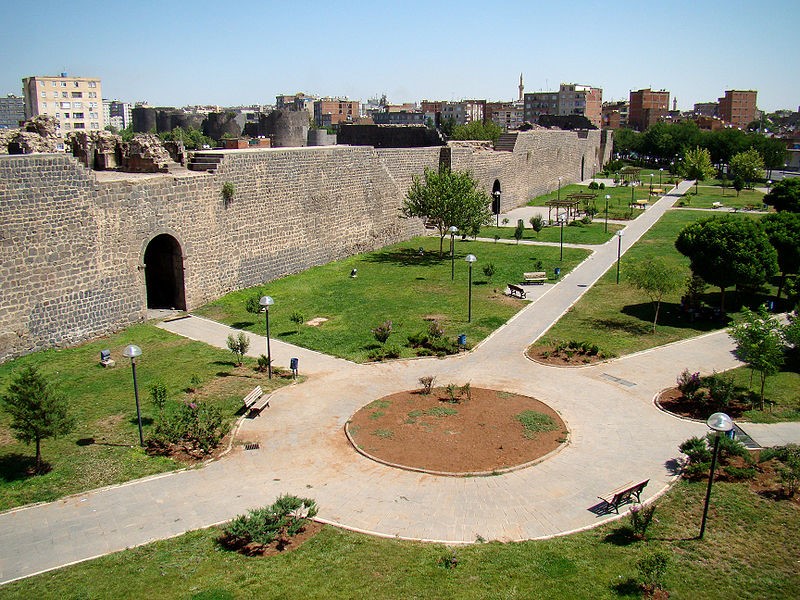
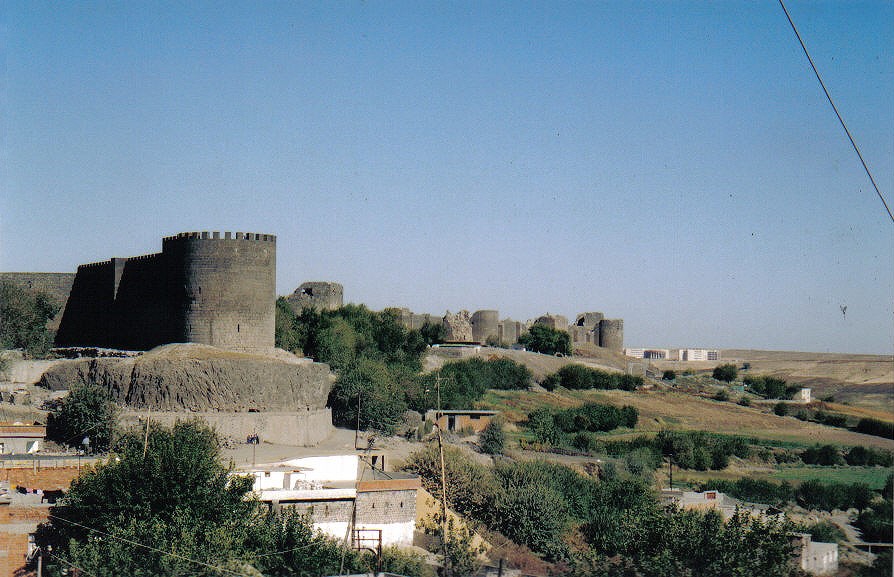
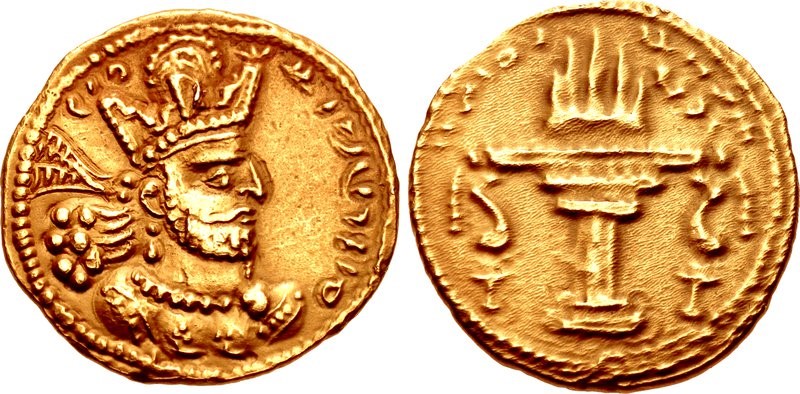
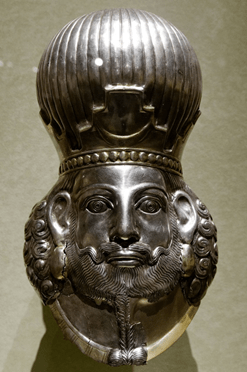
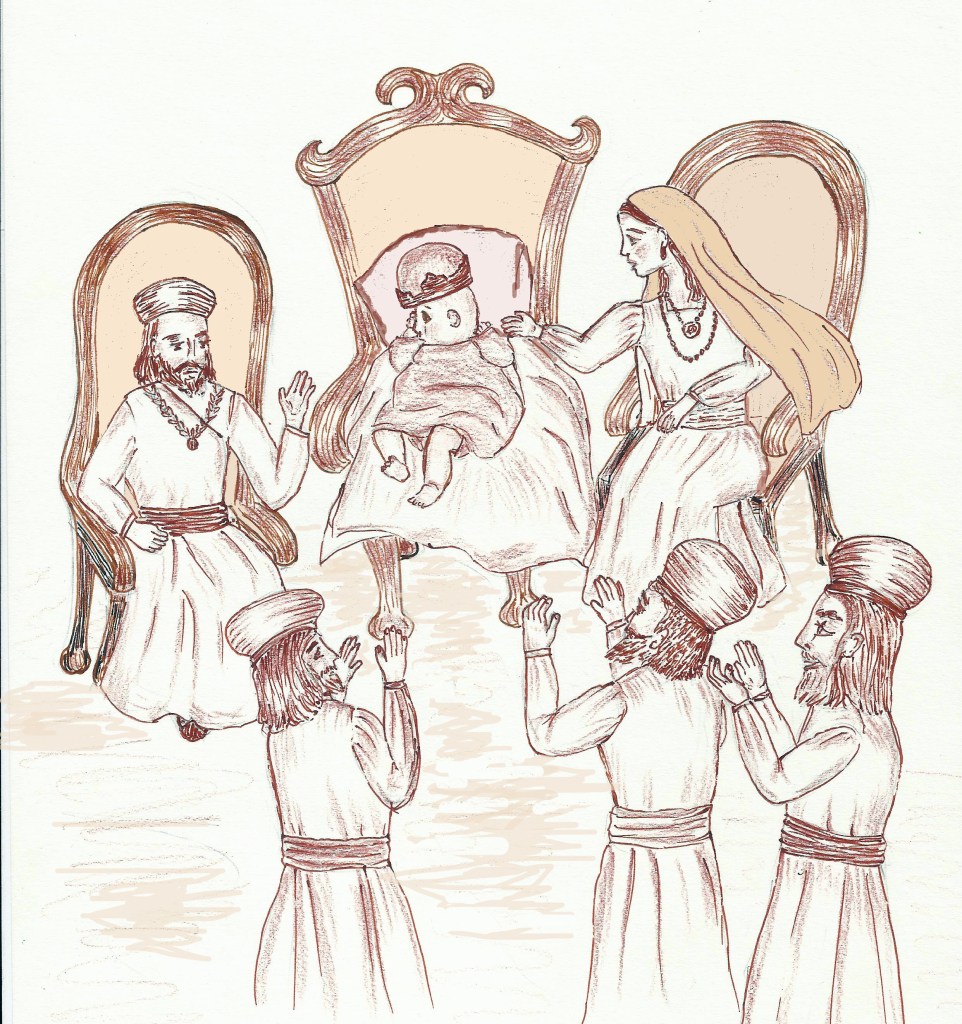

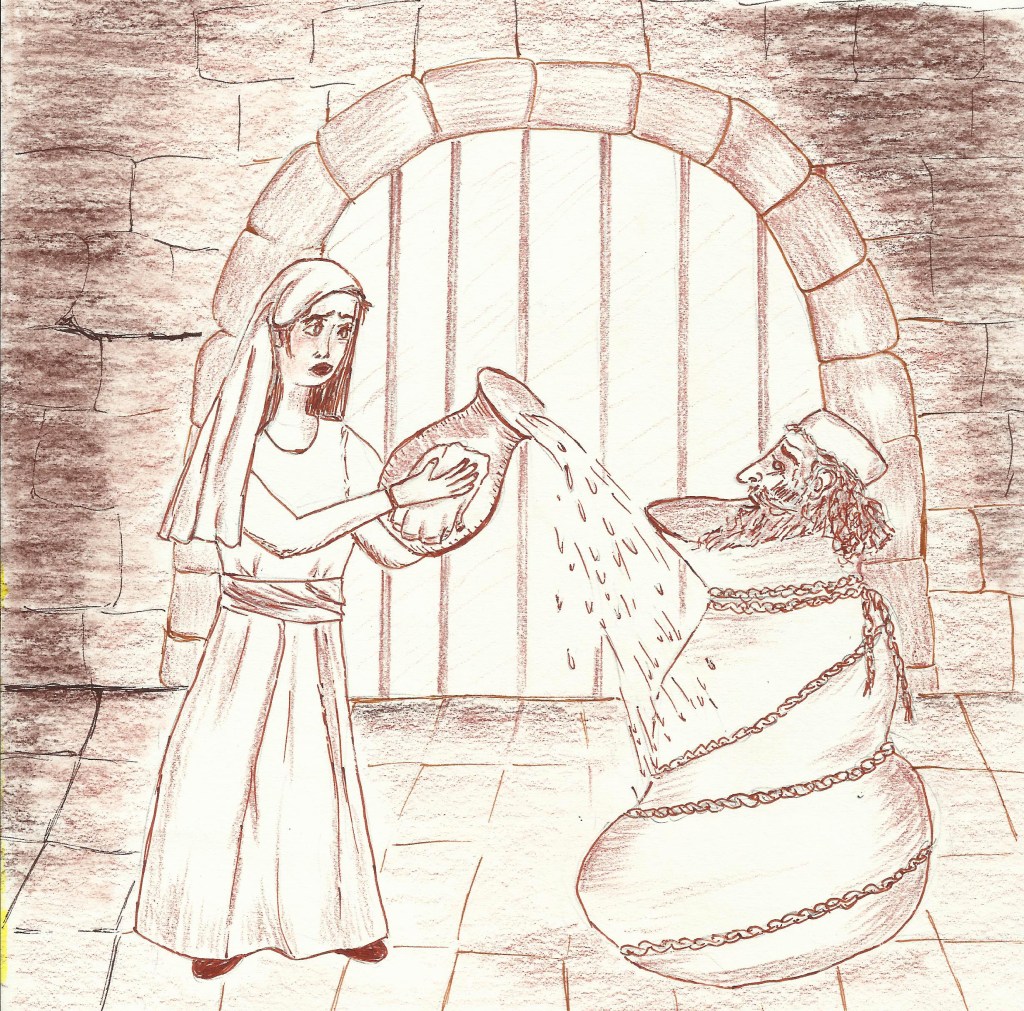
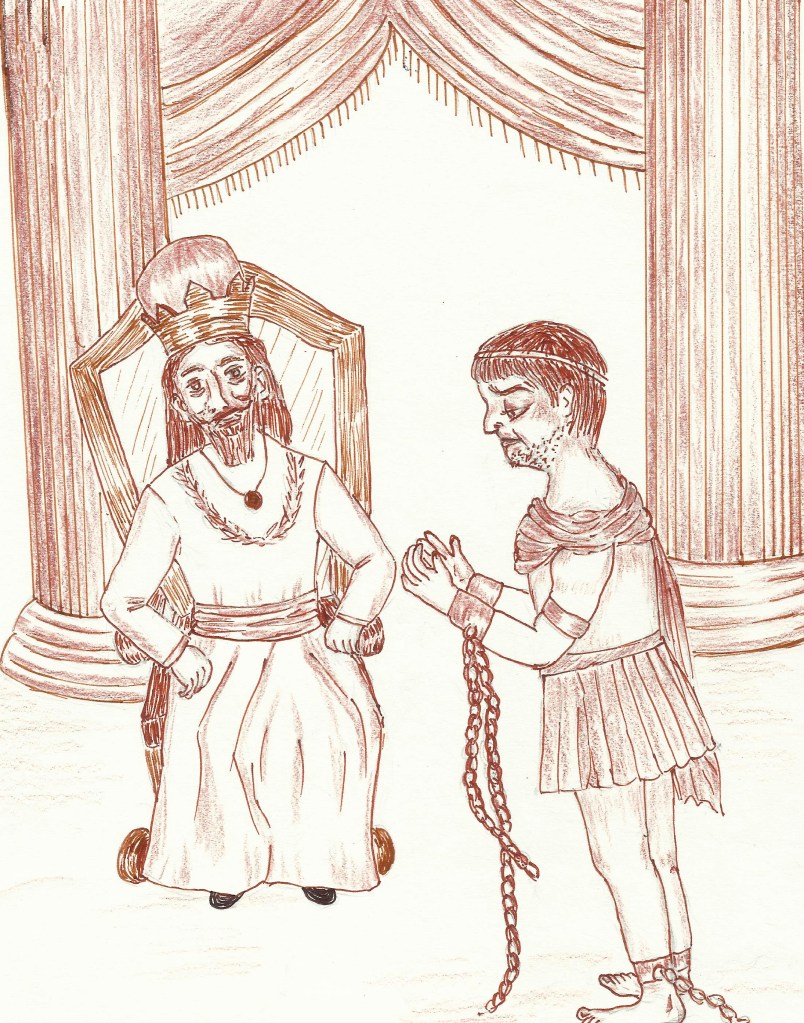


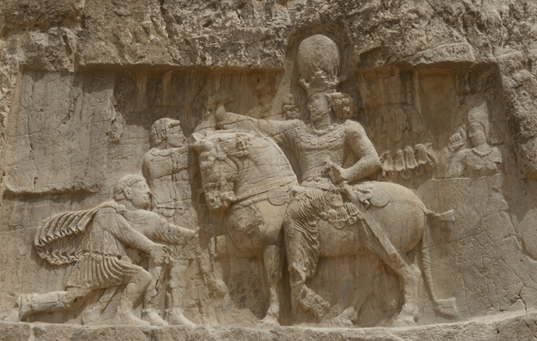
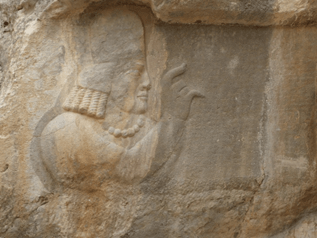
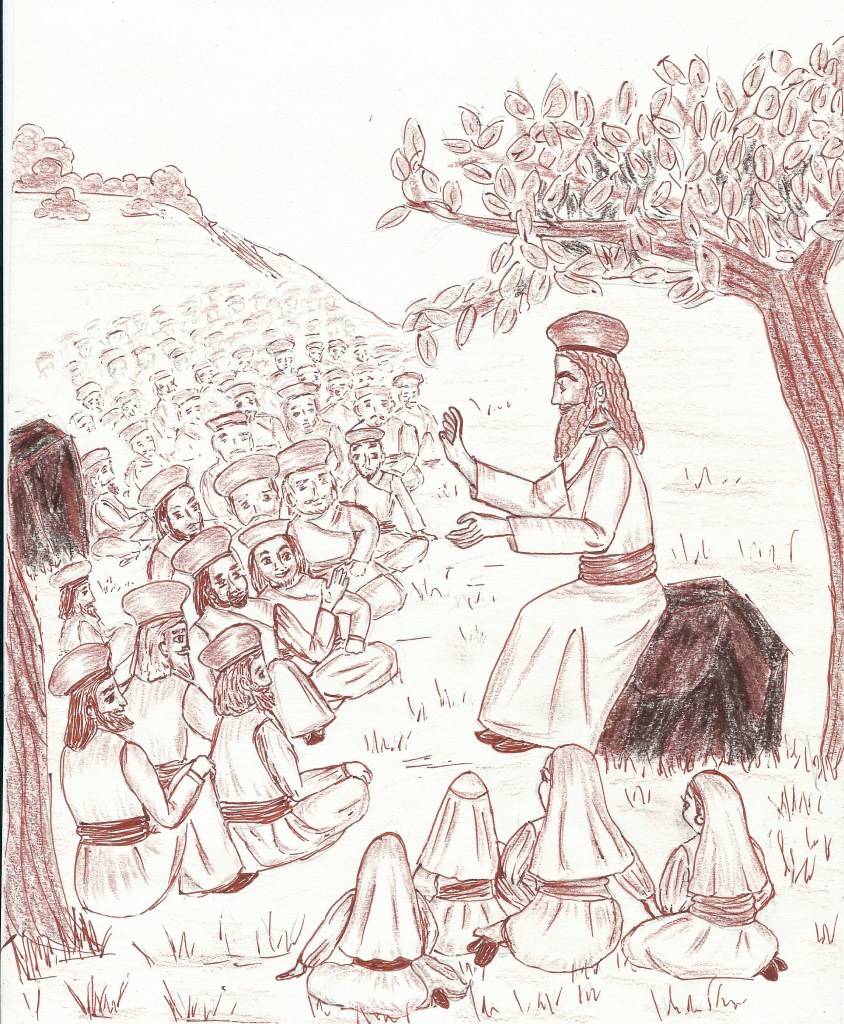
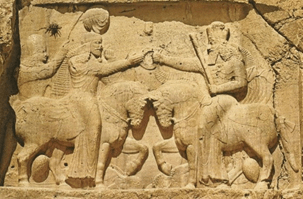
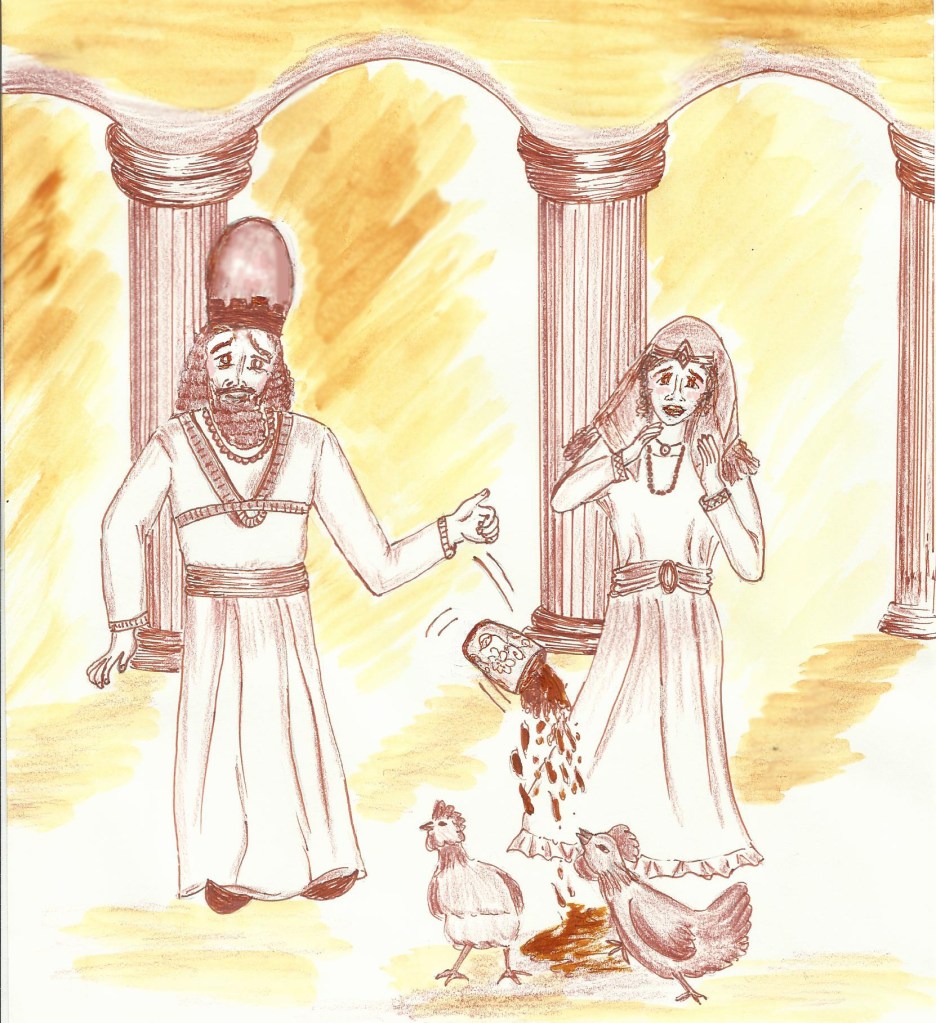


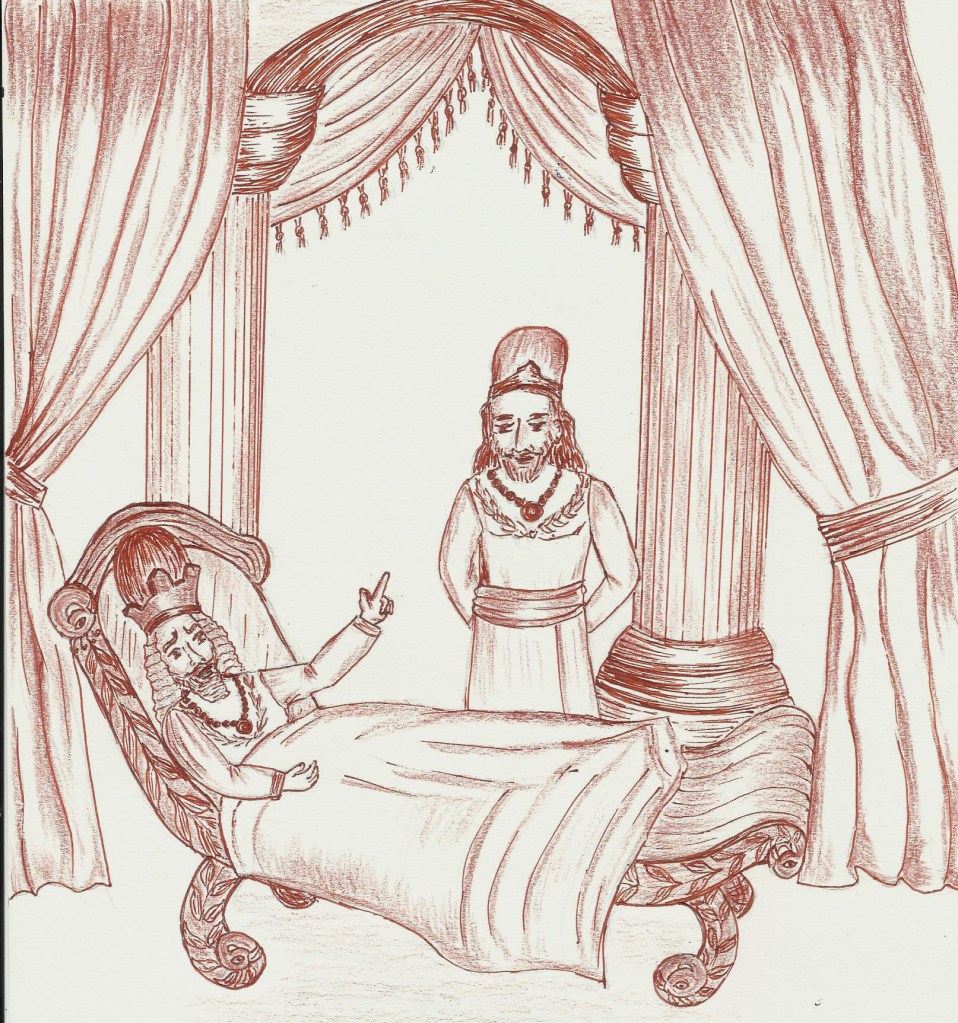


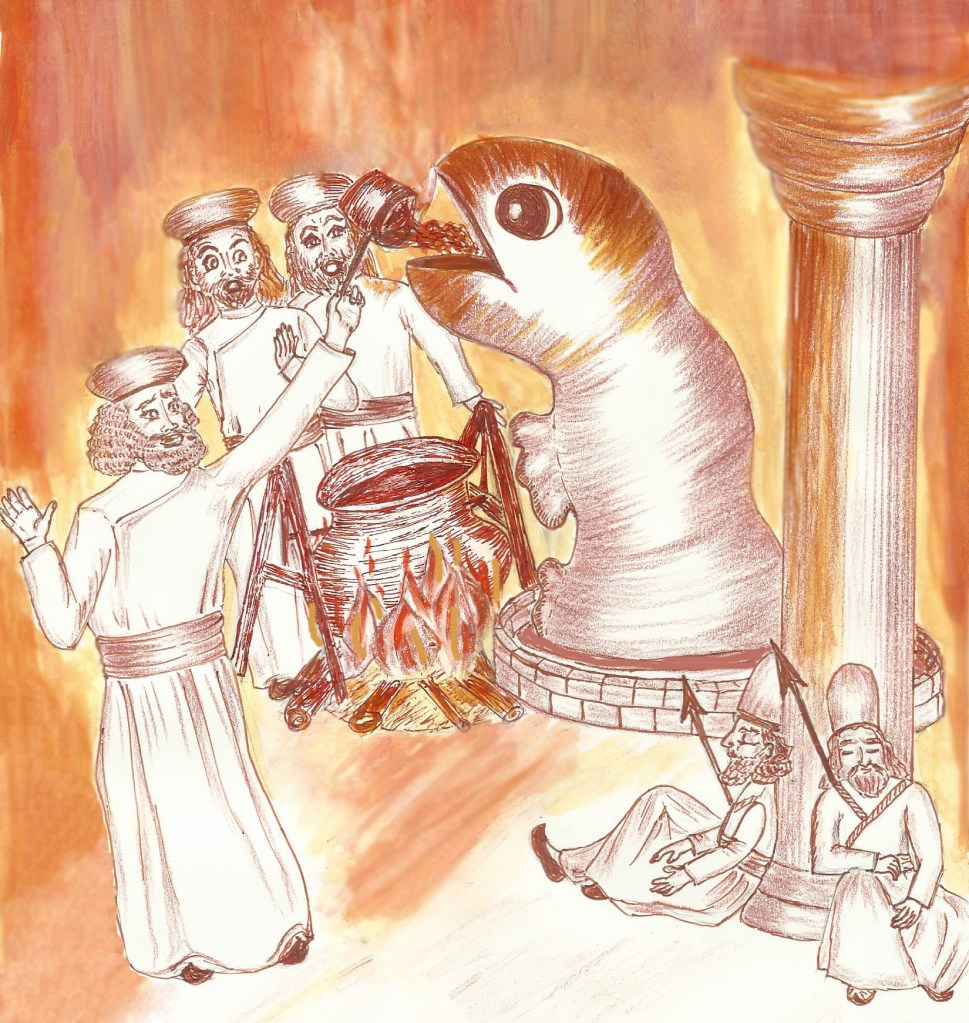

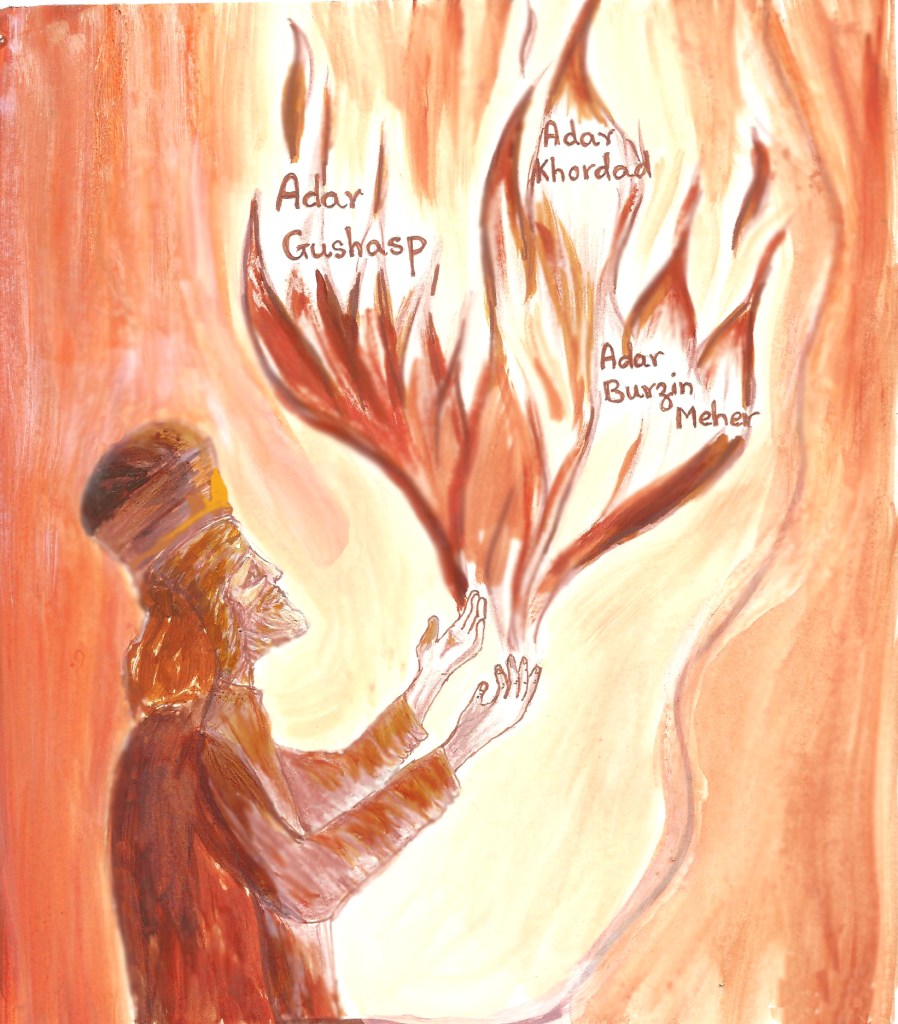
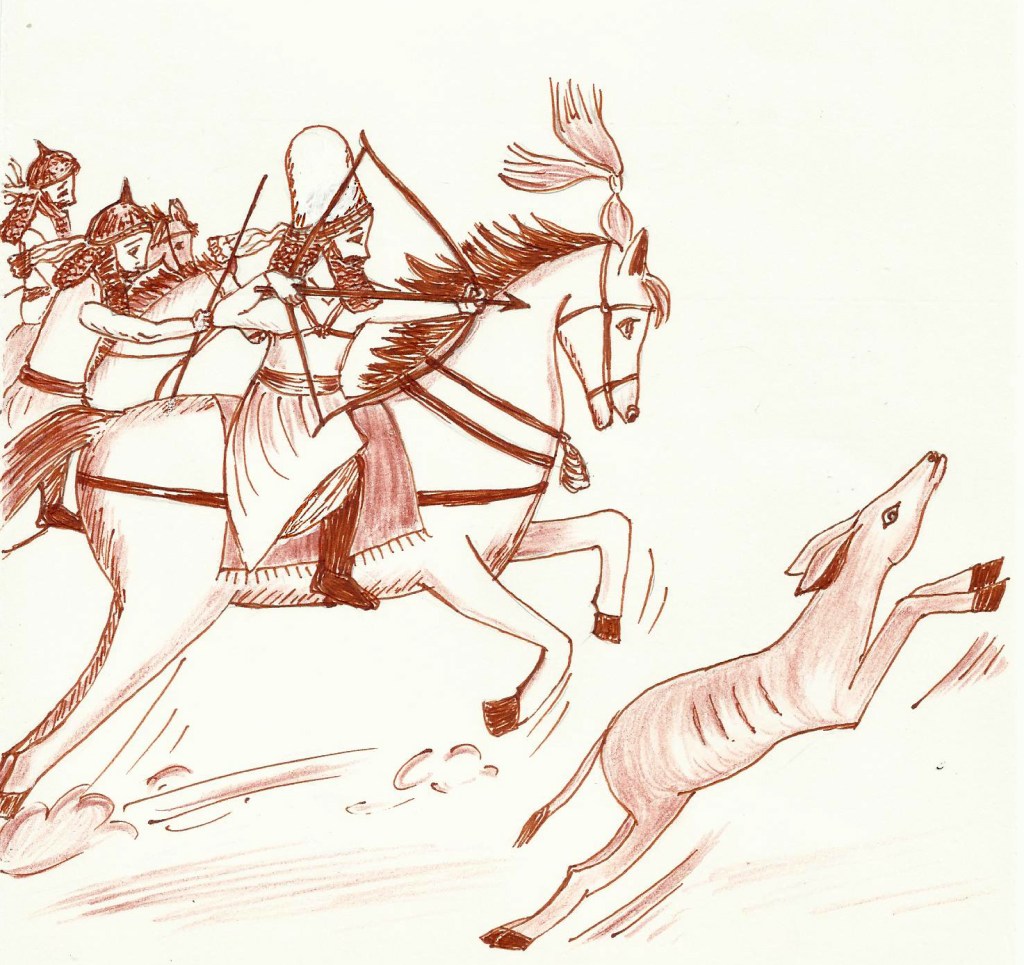

 Ramiyar Karanjia