The armies requested by the Kaisar for Khushru arrived. He added one lakh of his own soldiers and along with a lot of wealth, weapons, gifts and servants, sent it to Khushru. Along with that, he also sent Maryam, one of his princesses, as a queen for Khushru. Then he asked his brother Neyātus to lead the army to Khushru.
Neyātus met Khushru, along with the army. Maryam was presented to Khushru and he spent three days with her. Then he prepared to move towards Azarbaizan to go to Iran. He made Neyātus the commander of his army. On the way, he met Bandui and his friend Mausil who offered Khushru his army. The army of Nimruz also joined him.
When Behram Chobin came to know of Khushru advancing with the army, he prepared letters for Khushru’s commanders Gastaham, Bandui, Gordui, Shapur and Andiyān asking them to desert Khushru and come into his fold. He sent the letters with Dārā-panāh, one of his commanders.
When Dārā-panah reached Khushru’s army, he was awe-struck by its size and might. He and his commander Behram had expected something very small. Dārā-panāh did not like the betrayal, and he decided to go straight to Khushru and give the letters to him.
Khushru went through the letters and consulted his commanders. Together they decided to beat Behram in his own game, and prepared a reply, as if it was jointly written by the commanders. In the reply, Behram was informed that they would remain on Khushru’s side but fight for him against the Roman army. When Behram received this letter he was very happy.
Behram asked his commanders Yalān-sineh and Yazad-goshasp to prepare the army to attack Khushru. When the commanders approached Khushru’s army, they were over-whelmed by its sheer size. The combined army of Khushru was ready to take them on.
A Roman warrior by the name Kut asked Khushru whether he could go and fight Behram. Khushru allowed him to go. Kut was very easily defeated and killed, and so were many other Roman warriors, who went one after the other. Now, Khushru decided to send his Iranian army to fight Behram.
In the war, Khushru’s army met Behram’s army. Behram was on a white elephant. The Iranian warriors wounded the elephant, but Behram continued fighting on horse-back. He wreaked havoc in the enemy folds. Khushru first wanted to himself go and fight Behram, but his warriors stopped him from doing that.
Khushru’s warriors went to fight Behram. First Yalān-sineh and Azar-goshasp went, but both of them were defeated. Then Behram saw Khushru and followed him. Khushru started fleeing on his horse, but he soon realized that he had reached a dead end and there was no way he could escape. Just then, out of nowhere, a divine figure dressed in green, riding a white stallion, appeared before him.
The divine figure gently picked up Khushru and placed him in a safe place. A relieved Khushru could not control his tears at being saved from near death. He asked the figure, “Pray, tell me, who are you?”
The divine figure replied, “I am Sarosh Yazad. You will soon become the emperor of Iran. You are honest and divine. Never lose your piety.” So saying he disappeared from view.
Just then, Behram approached the place and saw Khsuhru talking to a divine figure. In exasperation, he exclaimed, “Uptil now, I was successful, as I had to just contend with humans. Now that I have to contend also with divine beings, I don’t think I could succeed.”
Neyātus and Maryam had seen Khushru being chased by Behram in the dead end. They were almost certain about his imminent death. Just then they saw Khushru coming from the other side of the mountain. They were shocked and surprised. Khushru narrated the whole incidence to his soldiers, and the entire army rejoiced. Now Khushru was confident that he will be able to regain his empire.
On the following day, when the war resumed, Behram tried to attack an unprepared Khushru, but he missed his mark. Khushru then followed Behram. The Iranian army was motivated by their king’s bravery. They followed Behram’s army which had started retreating.
Khushru announced that whoever decides to surrender should be pardoned. Many of Behram’s commanders and soldiers surrendered. When Behram became aware of this, he collected some treasures and fled.
Khushru sent Neyātus to follow Behram. The two met in a bamboo forest and fought each other. Neyātus was defeated and he pleaded for his life. Behram spared his life and asked him to go to Khushru and tell him that he had spared him. From there Behram proceeded towards Rae, from where he went to China. Now the coast was clear for Khushru to re-occupy his throne.
Khushru entered Ctesiphon in 591 CE and re-occupied the throne. He sent a letter to the Kaisar informing him about the developments. The Kaisar was very happy. In a return letter he praised him, and with it sent some clothes, ornaments, a jewel studded cross and wealth. When Khushru received this he was not sure whether to wear the rich clothes, as there was a cross on each clothe and he would run the risk of being called a Christian.
His minister however told him that by wearing the clothes he would not become a Christian, as he was a staunch Zoroastrian at heart. So Khushru wore the clothes. On seeing him, some of his courtiers understood that he had done this just to please the Kaisar, but others accused him for sympathizing with Christians and Christianity.
After Khushru ascended the throne, he had the difficult responsibility to keep both the Zoroastrians and the Christians happy in his court. One day when Khushru was having food and drinks with his courtiers, he had worn the robes with the cross, presented to him by the Kaisar. The courtiers were not happy with this.
Once, when Khushru was praying the bāj before food, holding a barsom in his left hand, Neyātus stood up and shouted at the king, accusing him of insulting Christ by wearing a cross and doing Zoroastrian prayers and rituals. This attitude angered Bandui, and he immediately stood up and slapped Neyātus.
A furious Neyātus stormed out of the court and sent a message to the king that he immediately wanted him to hand over Bandui to him or he would attack. Khushru was distressed at Neyātus’ behavior. He realized that this man could endanger the good relationship he shared with the Romans.
Just then Maryam approached the king and requested that she be allowed to play the mediator and pacify Neyātus, who was her paternal uncle. She went to him with Bandui and calmed him down. The Roman realized his mistake and there was reconciliation.
Khushru then sent Neyātus and the Roman soldiers back to Rome with lots of presents. He rewarded his faithful warriors Bandui, Gastaham, Burz-meher, Ram-barzin, Shapur, Andiyān, Gordui and Bālui by giving them lordship over provinces. He made Tokhāre the treasurer and Kharrade the Commander-in-chief of the armies. He handsomely rewarded all advisors and soldiers who had remained faithful to him.
The Kaisar sent Khushru a letter indicating his willingness to help him. He requested him to wait till he gathered the required army. The Kaisar also wrote that he was happy that Khushru trusted him enough to come to him for help, and did not go to anybody else. He then dispatched the letter.
However, the Kaisar’s advisory team had second thoughts. They did a turnaround and told the Kaizar that it would not be advisable to help the Iranians, as they were past enemies. They feared that after regaining power, Khushru may once again demand taxes from them.
The Kaisar sent an envoy to Khushru with a second letter, asking him to ignore his first letter. In the second letter it was stated that he would not be able to help him as his advisors feared repercussions.
Khushru wrote back to him, assuring that these were things of the past and nothing like this would happen in future. He also stated that if the Kaisar was not willing to help, he would leave Rome and approach the king of China. He dispatched the letter with his warrior Tokhār to the Kaisar.
When the Kaisar received the letter, he was confused, so he called the astrologers. They referred to astrological books written by Plato and said that fate has decreed Khushru as the next king of Iran who would rule for thirty-eight years, and will maintain cordial relations with him. When the Kaisar heard this, he agreed to help Khushru, on certain conditions.
The Kaisar wrote a letter to the Iranian king, in which he put down the conditions. One that he will have to sign a treaty of friendship, second that he would surrender parts of Armenia, Mesopotamia and the fortress of Dara, third that he will let go of all taxes and fourth that he will have to marry his daughter Mariam so that the two countries would be united by their child.
The letter was dispatched and read out. Khushru wrote back to the Kaisar agreeing to all the conditions. He asked the Kaisar to send his daughter along with his courtiers, and he will accept her as his queen.
When the couriers and warriors of Khushru, reached the Roman court, the Kaisar wanted to test their intelligence. He made his craftsmen prepare a mechanical statue of a very beautiful crying lady, surrounded by maids. Then he summoned the Iranian warrior Gastaham and told him that sitting in the corner was one of his princesses who was very sad as her husband had passed away. He requested him to go and console her.
Gastaham fell for the ploy. He did not recognise the statue and actually mistook it to be a real lady. The mechanical statue bowed down to him and started shedding tears. Gastaham consoled the statue for quite a long time but it did not respond. Finally he went to the Kaisar expressing his inability to convince the princess.
Then the Kaisar summoned the Iranian warriors Bālui, Andiyān and Shahpur in succession, told them the same story, and asked them to console the princess. They too tried to console the statue mistaking it for the princess, and returned unsuccessful.
Finally the Kaisar called Kharrād and asked him to console the statue. He went to the statue and started talking. When he did not get any response, he realized that something was amiss. He noticed that the maids were still and not uttering a word. He also realized that her ‘tears’ were falling exactly at the same place, and she never moved except when she ‘bowed’ in the beginning.
The wise warrior Kharrād realized that the Kaisar was making a fool of the Iranian courtiers and warriors. He told the Kaisar that the lady was not real, but it was a mechanical statue. The Kaisar was impressed by him and told him that he was the wisest of all and he would recommend to Khushru to make him his minister. Then Kharrād was asked to explain to the Kaisar the differences between the Indian, Zoroastrian and Christian religions.
Behram’s sister tried to bring sense in him. She said, “Dear brother, do you know why Sam, Zal and Rustom never tried to occupy the throne, though they had so many chances. It was because they were wise and knew that this throne belongs only to those who have the divine glory of the royalty, those who are destined for it through lineage. Please drop the idea of occupying the throne of Iran, or it will bring you nothing but destruction.”
Behram agreed with her, but said, “Sister, I have come too far now to be able to retreat, even if I wanted to. Now it is either death or the throne.”
Khushru prepared for a Shab-e-khun “attack at night”, but Behram got this information through his spies, and he attacked first. Khushru’s army was badly defeated. The king’s advisors asked him to escape with some wealth and a few soldiers, since if something happened to him there would be no successor to the Iranian throne. Khushru agreed and did accordingly.
Behram saw Khushru while he was fleeing, and caught up with him. They had a brief duel, but Khushru managed to escape. Behram tried to follow him, but Khushru slowed Behram down by shooting an arrow at Behram’s horse. Meanwhile Khushru crossed the bridge of Naharavān and got it broken by the time Behram arrived. So when Behram arrived, he could no longer pursue Khushru and hence he went back to Ctesiphon.
The fleeing Khushru then went to his imprisoned father, seeking his advice. The blind Hormazd advised him to go to Rome and seek the help for finance and army from the Kaizar. As soon as Khushru left his father, Gastaham and Bandui took the life of Hormazd, fled from the palace and caught up with Khushru. Behram came into the capital, and entered the palace, and sent an army of six thousand soldiers to capture Khushru.
At night Khushru reached a Christian rest-house in the jungle where he sought refuge and food. The Bishop very kindly gave him food and wine and allowed him to rest there with Gastaham and Bandui. They had meal after taking bāj, holding the barsom in their hand.
Just as they were about to retire for the night, the chief Bishop came huffing and announced, “I see clouds of dust in the distance, behind which an army is advancing.”
Khushru was terrified at this news as his army was fatigued and in no condition to go any further. He beseeched Bandui, “O my well-wisher, I have run out of plans, now you will have to do something.”
A very somber Bandui declared, “In the present conditions there is only one plan I can think of, and that is to sacrifice myself to save you.”
A grateful Khushru, told him, “If you sacrifice yourself for me now, you will surely go to heaven. Anyways, we all may die if we do nothing. But by your sacrifice you may at least save the king. Do tell me your life-saving plan.”
“We both are almost of the same height and body,” Bandui explained. “I will wear your royal clothes, fool the enemy from a distance. They will think that you are standing here, and thus I can keep them waiting for some time. In the meantime, you will immediately flee with a few soldiers to Rome, as I hold the enemy up for a couple of days by my trick. When they find that they were tricked, I may most certainly lose my life, but I will die happy, that I was able to save my king.” A grateful Khushru, thanked Bandui for this supreme sacrifice and immediately escaped to Rome. Bandui then asked the Christian priests to leave the place and go somewhere safe.
Bandui wearing King’s clothes, crown and jewels stood on the terrace of the Christian rest-house.
The enemy soldiers look at him from down at a distance. (Illustration by Mrs. Katie Bagli)
Bandui then wore the King’s clothes, crown and jewels and stood on the terrace of the Christian rest-house. Behram’s army came considerably near to see him, but not near enough to make out his face. The enemy soldiers mistook him for the king and started shouting in joy. Bandui was assured that his trick had succeeded. He rushed down changed to his normal clothes and again went up to the terrace of the rest-house.
First he asked the soldiers for their leader. Behram, son of Siyavakhsh, came forward. Addressing him, Bandui said, “Tell your commander that our king is very tired and wants to rest for now. He will surrender himself to you tomorrow morning.” The leader agreed and they stayed on for the night outside the building.”
The next morning, the army was awaiting Khushru’s surrender, but he did not turn up. They were getting impatient as the sun had already gone up. Bandui once again went on the terrace and told them, “Our king could not sleep yesterday night as he was praying. Now he is resting. Since the sun has already gone up, he has decided that we should proceed tomorrow morning.”
Behram, son of Siyavaksh was not sure what to do. He feared that if he forced the king, he may want to fight, for which they were not prepared, and which may also anger their commander Behram Chobin. Hence, he decided to wait for one more day.
The next morning Bandui went up to the terraced and announced to Behram-e-Siyavaksh and his army waiting down, “Our king Khushru had fled to Rome two days back, and may have already reached there safely. Now you have two choices. You may either fight with me and I will fight till the last breath of my life, or take me as a prisoner to your Commander Behram, where I will answer all his questions.”
A flabbergasted Behram-e-Siyavaksh was completely floored by the trick. Hethought for some time and decided to take Bandui as a prisoner to Behram Chobin.
When Behram-e-Siyavaksh reached Behram Chobin with Bandui, he was very angry on both of them. He ordered Bandui to be imprisoned for the time being. He decided to deal with him very strictly later on.
Behram Chobin called a conference of the senior courtiers and staked his claim for the throne. The courtiers agreed to have him as the king, considering that he had saved Iran from the Chinese king Saveh. Most senior courtiers like Sheran-gurāz, Farrokhzād and Sambāz spoke in his favour and pledged their allegiance to him, even if Khushru were to return.
However a few courtiers, like Khushru the ruler of Kharzvan, maintained that Behram Chobin had no right to occupy the throne as he did not belong to the royal family. He said, “Even a lady of the royal family is preferable as a ruler than the bravest warrior who does not belong to the royal family.”
There was a danger of tension erupting in the court among the two groups, as members of both the groups drew their swords. Behram Chobin intervened and warned that nobody should use the sword or he will severely punish them. Annoyed, he left the court.
The next day he occupied the throne and issued a decree announcing himself the king of Iran, and henceforth only his family members would be entitled to the throne. He took the signatures of all courtiers who accepted him as the king, and to those courtiers who did not sign, he gave a period of three days to leave Iran and go to their king Khushru in Rome.
In prison, Bandui befriended Behram-e-Siyavaksh who was his guard. He convinced him that Behram Chobin will soon lose his throne, since Khushru will attack him with a big army from Rome. He assured him of pardon and a good position once Khushru became the king.
Bandui not only convinced Behram-e-Siyavakhsh to free him, but also to kill Behram Chobin, when he was outside, playing the game of Chogan-gui. However, the wife of Behram-e-Siyavakhsh was a big admirer of Behram Chobin, and she warned him of her husband’s plan. Immediately Behram apprehended Behram-e-Siyavakhsh when he came on the play-ground and killed him.
Then Behram Chobin instructed his trusted man Māhrui to be Bandui’s guard. To their dismay, they realised that he had already fled. It was then, that Behram Chobin realized that it was Bandui who had misled Behram-e-Siyavakhsh. He regretted killing his trusted commander in hurry.
On the other hand Bandui, with a few trusted soldiers of Behram-e-Siyavakhsh, fled towards Ardabil. On the way in the jungles, he met an Armenian by the name Mausil and befriended him.
Khushru fled non-stop towards Rome. On the way, he was warned him that the soldiers of Behram Chobin were following him. A tired and hungry Khushru reached the Euphrates river where a kind Arab leader by the name of Kaius-e-Hāres gave him food and place to rest. On the way he met a kind man by the name Kharrād-e-Barzin who also gave him food and became his guide. From then on he became a trusted advisor.
Khushru reached Rome in 590 CE after passing through many villages and cities. On the way he met a very old priest in a Church, who was a renowned astronomer. The priest predicted that Khushru would get back his throne back in a year with the help of the Roman Emperor, that he would marry his daughter and thereafter he would have a very happy life. He was also told that he would have to beware of his uncle Bestam.
Now, Khushru knew that the real name of his uncle Gastaham was Bestam, so he summoned him and told him of the prophecy. Gastaham pledged that he will never do anything to betray his trust. The, he went further and stopped in the city of Hierapolis, and stayed there with some priests in a Church for three days.
When the Roman Kaisar Maurice (582-602) came to know of Khushru’s presence in Rome, he conveyed a message to him assuring him all possible help. Khushru in return sent his best warriors Bāluy, Shapur, Kharrad and Andiyān to the Kaisar at Constantinople, under the leadership of Gastaham, with the message seeking help of the Kaisar in over-throwing the rebel king Behram Chobin.
Hormazd IV had a son called Khushru who was very dear to him. However, he had a strict upbringing. Later the son came to be known as Khushru Parviz.
Behram poisons the king about prince Khushru
Behram Chobin, Hormazd IV’s commander who had become a rebel, devised a wicked plan to poison the mind of king against his son Khushru. He issued coins in the name of prince Khushru and asked his people to circulate it in such a way that they come to the attention of king Hormazd, who would then think that his son has become rebellious and is challenging him.
Thereafter Behram informed the king that his son was planning to overthrow him. He also mentioned that he personally would prefer Khushru Parviz as a king, and that he would be faithful to the son but not to the father.
Behram was hoping that king Hormazd would start doubting Khushru Parviz, and perhaps have him killed, which would pave his way to defeat and overthrow the ageing king Hormazd and takeover the throne of Iran.
As Behram had schemed, his devious plan had the desired effect. On seeing the coins, Hormazd IV was furious at his son Khushru. Without asking his side of the story, the king jumped to the conclusion that his son was planning a rebellion. He asked his advisor Ain-Goshasp to have his own son Khushru killed.
One of the king’s guards of the king, who had overheard the conversation, was a well-wisher of Khushru. He went to the prince and cautioned him about the plan hatched to take his life. Khushru immediately fled the palace and went to Azarbaizan. When the courtiers and commanders came to know of this, they were disgusted with the king.
Some of the courtiers like Bādān, Piroz, Pilzor, Estāy, Khanjast, Sam and Asfandyar went to Khushru and pledged their support to him. They assured him that they will fight in his favour if the king tried to do anything to him. They went and took an oath at the Atash-kadeh of Azar Goshasp to always be loyal to the prince.
When the king came to know about the prince’s escape and the courtiers defecting to his side, he became very angry. He imprisoned Khushru’s maternal uncles Gastaham, Bandui and some other relatives, suspecting them of complicity in his escape.
King Hormazd was extremely heart-broken. On the one hand he feared Behram and on the other hand he was anxious about Khushru. He stopped going to court and lost interest in life. News about this spread all around.
Taking advantage of the anarchy, maternal uncles Gastaham and Bandui, broke out from the prison and led a revolt against the king in order to get Khushru on the throne. They stormed into the palace, and snatched the crown of king Hormazd. Instead of killing him, they blinded him and left him writhing in pain. When Khushru received the news of his father’s deposition, he was saddened as he did like his father, and had always been willing to serve him. People had created misunderstanding between them and so he had to flee in order to save his life. Gastaham asked him to come back to Iran and rightfully claim his throne.
In 590, Khushru reached the capital and occupied the throne. At night he went to see his father and cried his heart out on seeing his plight.
“Father”, he said, “Why did you not trust me? If I was with you, none would have dared to harm you. Even now I want you to be the king, and serve you.”
The father realized his mistake, but it was too late.
He told his son, “Now we are good at places where we are. I just ask for three things from you. First, every morning come to meet and greet me, even for a short time. Second, send an old courtier or commander to talk to me, read to me and spend time with me, and third blind your two maternal uncles who have blinded me.”
Khushru agreed to the first two, but about the third wish, he said, “Father now the time is not right to punish my uncles, as now we have to focus towards fighting Behram Chobin.” So saying the dutiful son bid his grieving father a tearful farewell.
When Behram came to know that king Hormazd was blinded and imprisoned, and that Khushru had taken the throne, he took the opportunity to attack and overthrow the new king.
When Khushru came to know of this, he sent spies to Behram’s camp to ascertain the strength of his army. The spies returned with a very positive review about Behram, that he was a wonderful commander, he communicated well with his soldiers and always based his opinions on first-hand information, rather than on hearsay or other’s advice. Moreover, he was a voracious reader, had read most books on wisdom and always kept books as his companions and advisors.
Khushru was impressed by Behram’s good qualities. He desired to have him as his advisor, and hence he would offer him truce. Khushru had never met or seen Behram before. He went to Behram’s camp and asked one of his commanders to identify him from a distance. When Khushru saw Behram on his black horse, he realized that he was quite ugly, and hunchbacked.
Khushru, on his white horse, went to meet Behram, asked for truce and offered him commandership of the army. Behram declined the offer. They talked at length about blaming each other for their faults and being ungrateful to their benefactors. Then the two went their way.(To be continued…….)
When Mehrān came, he addressed the king, “My lord, I am the courtier who was sent by your father to go to China to select your mother. At that time, the king of China had an astrologer predict the future of his daughter. He had predicted that you will being the king and in your reign a huge army of King Saveh would attack you and a young warrior known as Chobin would defeat the enemy.”
As he finished speaking, old Mehrān’s life left his body. It was as if he was staying alive just to give the king this message. The king announced a search for Chobin whose physical features were aptly described by Mehrān. Farrokhzād, the supervisor of the royal stables, immediately recognized the warrior as Behram Chobin, son of Gushasp, the chieftain of the provinces of Barda and Ardabil.
The king immediately summoned Behram Chobin. The king saw in him all the traits described by Mehrān. Behram was informed about all that had transpired, and was given a position in the king’s court. He was asked whether he would lead an army against Saveh, to which Behram readily agreed. He said, “I am not afraid of the huge army. I believe one should never give up without trying. Its only if one makes an effort that God can help us. I will never give up, fight till my last breath, and try to always return victorious.”
The king and the entire court got a new lease of life at Behram’s motivating words. The king appointed him the commander and asked him to select the army.Behram selected three fearless warriors as commanders under him. Then he selected an army of only twelve thousand soldiers in which there was a battalion of forty year old sword wielding soldiers.
The king was perplexed by his choices and asked him, to which he replied, “O wise king! I have studied warfare and have come to the conclusion that the ideal number of soldiers in an army is twelve thousand. Beyond that, the army is difficult to control. In my study of history, I have seen that great Iranians like Rustom and Asfandyar always took an army of twelve thousand soldiers and have been successful.
“Next, about my choice of forty years old soldiers, I have learnt through my experience that this age is the best age for soldiers when they are not only strong but also more experienced, faithful, contented and worldly wise. They never run away from the battle, but fight till the last breath.” The king was impressed at the replies of Behram.
The following day Behram set off for the war against Saveh with an army of twelve thousand soldiers. At his request a scribe by the name of Mehrān was sent to record notable happenings.
After Behram left, one of the senior ministers cautioned the king about Behram’s brash and blunt attitude, but the king was too impressed by him to notice anything negative. He was relieved that he had someone to take on the might of the army of the powerful king Saveh of China.
However the minister’s warning kept on rankling the king, so he dispatched a spy to find out how Behram was faring. The spy found him to be very arrogant, ambitious, strict and ruthless. He reported this to the king, which made him very anxious and insecure. He called Behram back, but he did not come saying it was inauspicious to return, and moreover it would boost the morale of the enemy king.
When king Saveh came to know about Behram, he sent a messenger trying to bribe him and buy him off, but Behram was faithful to his king. King Saveh’s army proceeded to attack and Behram’s army was preparing to face the attack. Behram chose a strategic narrow valley so that Saveh’s huge army could not get into it.
King Saveh found Behram to be very brave and talented. He again sent a messenger offering Behram, the lordship of a province and his daughter in marriage if he deserted the Iranian army. He also offered him the crown of Iran and Rome, in future, after he would defeat them.
Behram replied to him that his offers were too late, and that it just showed that now he was scared of him. He gave him an ultimatum of three day to surrender, otherwise he would attack him. In the evening, both the armies retreated back to their camps.
That night Behram had a dream in which he saw himself defeated at the hands of king Saveh, and when he seeks help from the Turanians, he is turned down.
In the morning, a spy came and reported to Behram about the huge army of king Saveh. He compared the enemy army to a buffalo and Beharm’s army to an ant. Such was the difference in their respective sizes.
However, Behram was confident of his strategy. He had walls built on both the sides of the battlefield and warned his commanders and soldiers that if anyone tried to flee, he himself will end their lives.
The war begins
When the war started, king Saveh first used his sorcerers to frighten Behram’s army. Evil magicians with snakes and pythons in their hands, made illusory black clouds appear in the sky, from which arrows rained. Behram told his soldiers that as this was an illusion, not be afraid of it and go straight ahead. The soldiers did as they were told and they were not harmed. Behram’s army came over their fears, stormed into Saveh’s camp and destroyed a large part of his army.
Saveh now employed his fleet of elephants which came storming towards Behram’s army. The soldiers were terrified, but Behram counselled and pacified them by asking them to aim their arrows at the trunks of the elephants. This would make the huge beasts bleed profusely and lose their bearings. The soldiers did accordingly, and the mighty elephants, terrified on seeing their bleeding trunks, lost their minds and started running helter-skelter, destroying their own soldiers. The Iranian army followed the decimated Turkish army and lent a deadly blow to it.
When Saveh saw this sight he was terrified and started running away. Behram followed him, and as soon as he got an opportunity, he shot a poisoned arrow at Saveh, and the lifeless body of the Chinese king fell on the ground. Ninety percent of his army was killed. Behram’s victorious army cheered their commander with shouts celebrating his prowess and bravery, as he had decimated an army which was more than a hundred times the size of his army, without losing a single warrior.
Behram sent an emissary to king Hormazd with the news of his victory, and also sent the severed heads of Saveh and his younger son Fagfur to the king as a proof of his victory. The thrilled king immediately thanked God and handsomely rewarded Behram with gifts of land and gold.
The king distributed one lakh Dirham among poor people, servants and soldiers. He even sent money for fire temples and its priests for celebrating festivals. He set up a separate amount to re-habilitate war torn areas. He exempted the poor from paying taxes for four years.
On the other end, Parmudeh, the elder son of Saveh, was distraught and fuming at the news of the defeat and death of his father. He gathered an army of one lakh soldiers and marched towards Iran.
The king immediately informed Behram not to return to Iran, but to take an army to counter the forces of Parmudeh. The two armies camped near Balkh. Parmudeh decided to perpetrate Shab-e-khun “attack at night”. Behram came to know of this and he emptied his army from the camp. When Parmudeh’s soldiers attacked, the camp was empty. The bewildered Chinese soldiers were surrounded. A terrible battle took place in which a huge mountain of dead-bodies was assembled. This place came to be known as Behram-tal “the hillock of Behram”.
Parmudeh sent a message of surrender to Behram, and hid inside the strong fort of Āvāzeh. Behram agreed to take his request to his king. King Hormazd was very happy that the new king of China had agreed to surrender to him.
King Hormazd forgave Parmudeh, who getting a sense of freedom behaved arrogantly with Behram. This offended Behram, and he had Parmudeh whipped and hand-cuffed. Yazad-goshasp, one of his junior commanders advised him against doing such a thing. He told Behram that since Parmudeh had already been forgiven by the king, his action was like contempt to the king. Behram realized his mistake and freed Parmudeh.
Then Behram asked the scribe to make a list of all the treasures in the Fort of Avazeh and send it to the king. When the list was being made, Behram liked a few things, which he kept for himself. This too was noticed by Yazad-goshasp.
Parmudeh reached Iran and was well received by king Hormazd. The king also received the treasures from Parmudeh loaded on more than a hundred camels. All this made the king very happy, but when he came to know about Behram’s behavior with the king of China whom he had forgiven, he became very upset with him.
King Hormazd signed a Treaty of Friendship with Parmudeh, and sent him back with great dignity and a lot of gifts. When Behram came to know of this he was terrified. He went to meet Parmudeh on the way, but he completely ignored him and did not even accept his gifts. Behram did not know what to do. He hid in a place in the city of Balkh.
The king was very angry at Behram. In order to spite him and show his dissatisfaction, he sent him women’s clothing and women’s paraphernalia like spindle as a gift to indicate that he was not worth manly pursuits. Behram donned these ladies garments and went out in public. When people saw him like that, he narrated to them how he was wronged by the king, just because of his minor mistakes. The Iranians were very upset with their king for giving such horrible treatment to a brave and honourable commander who had saved his throne.
One day, Behram went for a hunt along with Yazad-goshasp, Kharrade-barzin and Yalan-sineh. While following an onager he stumbled upon a beautiful palace in the forest, and went in. Kharrade-barzin followed him without his knowledge. In the palace, a beautiful queen was seated on the throne. She welcomed Behram, had a feast in his honour and while he was returning she told him that he was destined to be the king of Iran and Turan and that he should get what is rightfully his. Determined and motivated by these words, an ambitious Behram returned to Iran.
Behram prepared a gold and ivory throne for himself in his palace and sat on it. His commanders realized that he was about to rebel. They realized that they would not be safe with him and hence at night Yazad-goshasp and Kharrade-barzin tried to flee. Yazad-goshasp was caught, and was afraid that he might lose his life, but Behram forgave him.
Kharrade-barzin managed to flee and reached king Hormazd’s court where he reported Behram’s change of attitude and narrated all that had transpired in the past few days. After hearing him out, the king was almost certain that Behram was being misled by Ahriman, the Evil spirit. He presumed that the onager was a demon in disguise, the palace was created as an illusion from a magician’s house and the queen was a sorceress, sent by Ahriman to instigate Behram.
The king was told, and he too realized, that great damage had been done on account of the spinning wheel and women’s clothes he had sent to Behram, which had strongly hurt the brave warrior’s self-esteem.
After some time Behram sent a wooden trunk as gift to the king. In the trunk swords were kept, but their hilts were twisted. When the king asked the meaning of this, he was told that the head of Behram and his other soldiers had gone against the king.
The king, in reply to this, broke all the swords into half, packed them in the same wooden trunk and sent them back to Behram. When Behram inquired the meaning of this, he was told that the king wanted to convey that whoever’s head would turn against the king, that head would be severed from the body. Behram and his entire army became very upset with the king. They also came to know that it was Kharrade-barzin who had revealed all the details about Behram to the king.
Behram now turned to his council of commanders and asked what they should do. Behram had a sister by the name Gordiyeh. She overheard the talk and counselled his brother not to rebel against the king. Behram’s other advisors were also against the suggestion of rebellion, because in Iran, since Peshdadian times, only a person who a descendant of the royal lineage could become the king.
However the commander Yalan-sineh continued instigating Behram to rebel, and it had the desired effect. Behram sought the help of Parmudeh, and asked him to forget the previous rivalry. The king of China agreed to this. He gave him an army and the mastery of certain provinces.
Behram then thought out a wicked plan to poison the mind of the king against his son Khushru Parviz. He issued coins in the name of Khushru Parviz and asked his people to circulate it in such a way that they come to the attention of king Hormazd. Once Behram knew that king Hormazd was aware of the coins, he informed him that his son was planning to overthrow him. He also mentioned that he personally would prefer Khushru Parviz as a king, and that he would be faithful to the son but not to the father.
Behram was hoping that king Hormazd would start having doubts about Khushru Parviz, and have him killed, which would pave the way for Behram to easily defeat the ageing king Hormazd and takeover the throne of Iran.
Behram’s plan had the desired effect. On seeing the coins, the king was furious at his son. Without consulting him, the king jumped to the conclusion that his son was planning a rebellion. He asked his advisor Ain-Goshasp to bring an end to Khushru Parviz’s life.
One of the guards of the king, who had overheard the conversation, was a well-wisher of Khushru-Parviz. He went to the prince and cautioned him about the plan hatched to take his life. Khushru Parviz immediately fled the palace and went to Azarbaizan. When the courtiers and commanders came to know of this, they were disgusted with the king.
Some of the courtiers like Bādān, Piroz, Pilzor, Estāy, Khanjast, Sam and Asfandyar went to Khushru Parviz and pledged their support to him. They assured him that they will fight in his favour if the king tried to do anything to him. They went and took an oath at the Atash-kadeh of Azar Goshasp to always be loyal to the prince.
When the king came to know about the prince’s escape and the courtiers defecting him, he became very angry. He imprisoned Khushru’s maternal uncles Gastaham, Bandui and some other relatives, suspecting them of complicity in his escape.
King Hormaz then asked Ain-Goshasp to go to Behram and ask him whether he was willing to serve the king. If he agreed than he would be given a province. However if he was keen on a rebellion, then he would challenge him, and fight the person bearing the message, that is, Ain-Goshasp.
Ain-Goshasp went with an army to Behram. He took with him as an aide, a prisoner who was known to him, and who had requested him to secure his release. Reluctantly the king agreed. On the way, an astrologer told Ain-Goshasp that he would be murdered by the released prisoner.
Terrified, Ain-Goshasp wrote a letter to the king to re-imprison the prisoner, and sent the letter with the prisoner himself, telling him that it was an urgent message for the king. On the way the prisoner got curious, opened the letter and read it. He was shocked when he read that the letter was indeed a trap for him. Enraged, he went back to the camp and killed Ain-Goshasp. Then he went to Behram and informed him about all that had transpired.
Behram was angry at him as he had killed an innocent man who had come to offer him a hand of friendship from the king. He ordered the prisoner to be hanged. The small army under Ain-Goshasp got scattered like a herd without a shepherd.
When king Hormazd came to know about this, he was extremely heart-broken. On the one hand he feared Behram and on the other hand he was anxious about Khushru Parviz. He stopped going to court and lost interest in life. News about this spread all around.
Taking advantage of the anarchy, many prisoners broke out from the state prison. These included Khushru’s maternal uncles Gastaham and Bandui, who led a revolt against the king and decided to bring Khushru Parviz on the throne. They stormed into the palace, snatched the crown of king Hormazd. They did not kill him, but blinded him and left him writhing in pain. When Khushru Parviz received the news of his father’s deposition, he was saddened as he had liked him, and was always willing to serve him. People had created misunderstanding between them and so he had to flee in order to save his life. Gastaham asked him to come back to Iran and rightfully claim his throne.
Hormazd IV was the son from one of the queens of King Nosherwan, who was the daughter of the Turkish king Khan Disabul. Hence Hormazd IV was also known as Turk-zād “born of a Turk.” He resembled his mother in stature and features.
For a few years he ruled wisely and nobly, but after that he became arrogant and ruthless. He mindlessly punished the elders and seniors in the court, since he suspected that they were more devoted to his late father than to him, and hence may betray him some day.
He first imprisoned and then executed the two senior-most ministers Buzorg-meher and Yazad-goshasp and their younger protégé Māh-āzar, all of whom had faithfully served king Nosherwan. When a minister by the name Zardusht tried to help Hormazd IV, even he was killed by asking him to eat food laced with poison.
Hormazd openly asked his junior ministers to give false evidence against the senior ministers, so that in the eyes of his subject he could paint them as traitors. In this evil scheme, a timid minister Behram, son of Āzar-mehān was roped in. He was asked to give false evidence for senior minister Simāh-barzin. However, Behram’s conscience did not allow him to betray his colleague and he openly confessed that the king had asked him to give evidence wrongly.
The king was first ashamed, but then became furious. He imprisoned both and had them killed after a few days. However, before dying, Behram told the king about a secret letter written by his father Āzar-mehān and kept in the treasury of the late king Nosherwan, in which it was written that king Hormazd will rule for twelve years and then there will be a revolt after which a relative of his wife will blind and kill him. King Hormazd was terrified by this letter.
The thought of the letter kept tormenting Hormazd IV. Moreover, on account of his killing spree, a time came when no wise and senior minister was left in his court. He king spent his time in his capitals at Istakhra, Ctesiphon and Esfahan. He now stopped the killing of the senior ministers, partly because of the letter and partly because he had already killed most senior ministers. Gradually he became god fearing and just.
Hormazd IV had a son called Parviz who was very dear to him. He also called him Khushru, the fortunate. In his kingdom, he had a rule that if a horse strays into a filed, the tail and the ears of the horse would be chopped off and the farmer be given ten times the compensation for the destruction. Once, Khushru’s favourite horse strayed into a field and inspite of Khushru’s repeated pleas, the king had its tail and ears chopped off and gave the farmer tenfold compensation.
After a few days, a local chieftain took a bunch of grapes from the vineyard without paying the price. When the vineyard owner came to know of this, he followed the chieftain and threatened to complain to the king. The chieftain was so scared that he removed his bejeweled waistband and gave it to him. The above incidents reveal that now the king had become very strict and just.
Right since occupying the throne, king Hormazd IV had to face formidable military situations as four enemy kings attacked him on from all the four sides. He was at wit’s end as to how to deal with them.
The Roman emperor Tiberius’s general Maurice attacked and invaded Iran from the west upto Media and Ctesiphon. Hormazd was able to defeat them in Armenia. In 581, Maurice returned to Rome to occupy the throne, but the war continued inspite of Hormazd’s plea for peace.
In 589, the mighty king of China Khakan Saveh attacked the king from the east through Herat with huge Turkish and Turanian armies. The Turko-Hephthalites attacked North eastern Iran, and taking advantage of the situation, the Arabs attacked from the South.
At Ctesiphon, King Hormazd IV convened an urgent meeting and summoned all his ministers for guidance. The ministers first chastised the king for slaying all his senior ministers, and then drew up a plan of action, to contend with the four enemies.
They told him to return the Roman provinces so that the Roman king would stop his attack. Then they advised their king to attack the Hephthalite king, as his army was small. Seeing this, the Arabs would retreat, and then the king would just have to concentrate on the mighty Chinese army of Saveh. The king followed the plan, and it worked effectively.
Now, only king Saveh’s army had to be dealt with. King Hormazd was contemplating how to get about that, when Nastuh, a courtier, approached him and said, “O great king! My father Mehrān Setād who is a very old man wants to reveal a secret to you.” King Hormazd was very anxious to know the secret, so he sent a palanquin to get Mehrān to his palace.
One day, king Noshirwan received the news of the death of the Roman Caesar. Immediately he sent an ambassador to the Caesar’s son offering him condolences and wishing him success as the new Caesar. He also mentioned that he had asked for prayer that prophet Christ’s blessings be with him, and assured him of military help, if he may need it.
The new Caesar, however, did not treat the ambassador with due respect. In his reply he stated that he did not need the Iranian king’s sympathy. He further stated that he suspected that the sympathy was false and was expressed so that the payment of taxes may continue as before.
When king Nosherwan received the reply, he was very unhappy. He vowed to avenge this insult and never to support the Romans again. He immediately set up an army and attacked Rome. When the Caesar came to know of this he also sent an army. The two armies met near Sakila (Syria) at the fort of Aleppo. The Iranian army captured the fort in no time. Thirty thousand Roman soldiers were captured. As king Nosherwan went to the battle ground to inspect it, he got the message that the ambassador of the Roman Caesar along with forty Roman philosophers had come to see him. The wise men apologized to the king about the immature behaviour of their Caesar. They agreed to pay him as much tax as he wanted. King Nosherwan ended the war and returned to Ctesiphon.
The Tāq-i-Kasrā also known as Aywān-i-Kasra, is a majestic palace built by Noshirwan around 540 CE. It is the only surviving remains of the Sasanian majesty in Ctesiphon, now near Baghdad. The arched aywān hall, open on the front side, and the throne room behind the arch are almost 100 feet high.
Today, the main portico of the audience hall, is all that is left of the structure. It is known as the Arch of Ctesiphon, and is the largest single-span free-standing arch/vault of unreinforced bricks in the world. It is considered one of the Wonders of the World, in Iraq.
The ruins of Tak-iKasra, as it stood about 100 years backAn artist’s visualization of the original Tak-i-Kasra
When the king was seventy four years old, he realized that it was the due to select an heir. He had six sons, of which Hormazd was the eldest.
He called his wise men and asked, “O Wise ones! I depend on you to secretly find out if Hormazd is fit enough to be the next king, and would he be kind and compassionate towards his subjects?” The wise men started investigating in earnest and reported every activity of Hormazd to the king.
Then the king called upon his council of ministers, headed by Buzorg-meher, to test the prince. Several philosophical and practical questions were asked to which the prince gave satisfactory replies, and he was chosen as the successor to his father. In his last will and testament, king Nosherwan declared his decision to give the crown and the throne to prince Hormazd. He gave admonitions to the prince which would help him run the empire. Then, the king gave an elaborate description as to how he should be consigned to the Dakhma, how his body should be prepared for the final journey.
King Noshirwan spent his days in seclusion and prayers. About a year after his declaration of his heir, he had a dream as he slept after his night prayers. In the dream, he saw a brilliantly shining child come out at night and happily climb a very tall staircase having forty steps, which was nearby. When he reached the top, his brightness lighted up the whole world, except the palace of the king.
A brilliantly shining child at night happily climb a staircase with forty steps, and reaching the top, his brightness lighting up the whole world
In the morning, a startled Nosherwan woke up and narrated the dream to Buzorg-meher. After pondering for some time, the wise sage said, “O great king!There is deep meaning underlying the dream. After about forty years, a man will emerge from among the Arabs, who will cause great disruption among the Jews, Christians and Zoroastrians. The entire Iranian empire will be shaken. This man will be remembered for centuries.
The next night he dreamt that his entire palace came crashing down on him, amidst shouts “The emperor’s palace has crumbled down.” Startled, the king got up and immediately called Buzorg-meher. On narrating the dream, he was told that it conveyed that the child he saw in his dream had already been born.
After a few days, king Noshirwan king passed away after a long and illustrious reign of forty eight years. Buzorg-meher grieved for a long time after his king’s death. His body was prepared for the final journey, and he was consigned to the Dakhma, as per the instructions given by him when he had handed over the throne to his eldest son Hormazd IV.
King Nosherwan deeply appreciated talents of all kind, whether it be learning, wit, oratory or valour. He made it a point to keep people with various kinds of talents in his court. One such person was an aged hakim (a herbal medicine man) by the name Barzuy. One day, he told the king that in his studies he had come across an Indian book wherein was stated that a special type of dazzling grass grew on a mountain in India. If a medicine was prepared by a knowledgeable person from that grass, it had the power to make a dead man alive. He sought permission to go to India with a few of his men to get that grass. Noshirwan told him, that though this did not seem probable, he may go. He further asked him to visit the court of king Rai as an emissary of the king of Iran so that he can get all the possible help, especially the services of a good local guide. Then the king sent Barzui with three hundered camel loads of gifts to India.
When Barzuy reached India, the Indian king was overwhelmed by the Iranian king’s generosity, and promised to give him all the possible help. He offered him a decent place to say and an honorable place in the court. The following day he asked some people knowledgeable in herbs, medicines and healing to go to the mountains and help Barzuy.
The group collected many herbs. They grinded and made a paste of each herb at a time and tried the same on corpses with a hope of bringing them alive, but none of them worked. Finally Barzuy was frustrated. He accepted defeat and realized his folly. He asked to be taken to the wisest person in India, and the group led him to a wise old man. The wise man, smiled on hearing Barzuy’s story and said that he himself had been misled by the book which he had referred to.
The wise man told Barzuy that the medicine book he had read should not be taken literally, as, like many spiritual books it too was allegorical. The herb mentioned in the book was a symbol for knowledge, and the mountains symbolisedfar away places. The herbs being away on a mountain meant that knowledgeable men preferred to stay far away from people. The corpse was an analogy for an ignorant man. Rubbing a corpse with herbs making it come alive meant that if knowledge was imparted to an ignorant person, he will become learned, which is allegorically referred to as coming back to life.
The wise man further said that when the Persian medicine book referred to the herb which made dead men alive, it was actually referring to the book of wisdom called Kalileh, which was in the Indian king’s Treasury. Barzuy, was highly impressed by the wise men’s explanation, and thanked him.
Barzuy then went to the king and requested for the book of Kalileh from his treasury. The king was reluctant to give the book, but he allowed him to read the book in the presence of his minister. Every day Barzuy would read parts of the book, memorise the same and then write it down in his letter to his king. Thus bit by bit, he passed the whole book to Iran. After his work was done, Barzuy decided to return. The king bestowed on him many precious gifts. Barzuy then set off from Kanauj to Iran.
In Iran, the king was very happy with Barzuy, as he had learnt a lot from the book, and this knowledge was beneficial to the body as well as the soul. Then he asked him to take whatever he wanted from the treasury. Barzuy just took a royal robe. The king was surprised at his choice.
Then Barzuy requested the king, that whenever anybody would decide to make a book from the excerpts sent by him in the letters, that person should mention his name too. Later on, a book in Pahlavi language was compiled from the information in the letters, and its first chapter the name of Barzuy was mentioned. Later the book was translated into the Arabic language in the reign of king Nasr. In the reign of Sultan Mahmud the book was re-written in rhyme.
Buzorg-meher is imprisoned One day the king, along with Buzorg-meher and some other courtiers went for a hunting expedition outside Madayan. After the hunt, the two of them were alone and relaxing. At that time the string of a jewelled arm-band of the king snapped and fell on the ground. Immediately a big bird swooped and picked up the arm-band. Buzorg-meher who was awake witnessed all this and realized that his bad days were approaching. Fear writ large on his face. Just then, the king woke up, and saw his fearful face. Assuming that he was guilty of some misdemeanor, he impulsively ordered that Buzorg-meher be taken under house arrest.
Bird coming down and swooping the king’s fallen arm band. Buzorg-meher watching in fright. (Illustration by Mrs.Katie Bagli)
Several weeks passed, and the king started missing his favourite minister. However since he himself had punished him, he felt helpless. It so happened that a new servant waiting on the king put hot boiling water on the king while washing his hands, which angered the king. When the servant came to serve Buzorg-meher in his house, he was looking very distressed, and so Buzorg-meher asked him the cause of his anxiety. He narrated all that had transpired. Buzorg-meher then taught him the correct way to serve the king.
When the servant again served, the king was highly impressed and inquired as to who had taught him. The waiter confessed that Buzorg-meherhad guided him. The king felt sorry for what he had done to Buzorg-meher, and asked the servant to go to Buzorg-meher and ask him how he was. Buzorg-meher cryptically replied that presently his position was much better than that of the ruler of the country. This angered the king and he ordered Buzorg-meher to be imprisoned in a dark cell.
After some days, the king again asked the servant to inquire with Buzorg-meher about his well-being. This time, Buzorg-meher replied that he was happier than the king. The king was furious and asked Buzorg-meher to be locked up in a small cage surrounded by nails and spears, so that he could not move or sleep.
This caused great suffering to Buzorg-meher. However, when the king again sent the servant to ask Buzorg-meher about his condition, he replied that his days were better than those of the king. When the king heard this he became pale. He selected a wise courtier and sent an executioner with him to convey to Buzorg-meher that if he again replied in a displeasing manner, the executioner will behead him.
Then theinstructed the wise courtier to ask Buzorg-meher why he said that his condition was better than that of the king. Buzorg-meher replied, that he had said so because it would be easier for him to embrace death as he had nothing to lose, whereas the king, if faced with death, had everything to lose, and hence he considered himself more fortunate, as death can come to anyone at anytime. When the reply was conveyed to the king, he realized the wisdom in Buzorg-meher’s words and released him from the house arrest. Buzorg-meher had become very pale and lean, on account of the sufferings.
Once the Kaisar sent his ambassador with a letter, gifts and a locked box to the Iranian king, challenging his wise men to guess the content of the locked box. If they were successful, he would continue sending taxes and gifts. But if they were unsuccessful, than he would stop giving taxes and an assurance from the Iranian king that he will not attack Rome. The king asked for one week and then consulted his priests and courtiers about the challenge. None was able to guess the contents of the box, and so in the end the king had to seek Buzorg-meher’s help.
He sent for Buzorg-meher,informed him about the locked box and asked him to help guess its contents. He even sent a horse and new clothes. Buzorg-meher decided to help his king, but on account of being under house arrest for a long time he had almost lost his eye-sight.
While going to the palace, he requested a wise man to sit next to him and describe anybody who passed their way. They first came across a beautiful woman. Buzorg-meher told the young men to ask her whether she was married. She answered in the affirmative and added that she was also pregnant. Then they went further and encountered another woman, to whom the same question was asked. She answered that she was married but childless. As they proceeded, they came across a third lady, to whom the same question was asked. She answered that she was unmarried and did not intend to marry.
Buzorg-meher then went to the king. On being asked about the locked box, he said, “O great king! Gather all your courtiers and the Roman ambassador, and I will reveal the secret of the locked box.” After the people gathered, he continued, “With the spiritual power that God has bestowed on me, I have been able to know the contents of the locked box without touching it. The box contains three pearls. One with a hole in it, the second half pierced and the third without a hole.”
The Roman ambassador opened the box, and removed another box from it. In this box, wrapped in a silk cloth were three pearls, exactly as described by Buzorg-meher. The king was very happy with the outcome. However he was also very sad at the way he had treated this great man. Getting courage from the king’s behavior, one of the servants who had seen the black bird snatch away the king’s arm-band at the hunting scene narrated the incident to the king, establishing Buzorg-meher’s innocence. The king became all the more repentant for wrongly judging and punishing such a holy and faithful person.
Several weeks passed, and the king started missing his favourite minister. However since he himself had punished him, he felt helpless. It so happened that a new servant waiting on the king put hot boiling water on the king while washing his hands, which angered the king. When the servant came to serve Buzorg-meher in his house, he was looking very distressed, and so Buzorg-meher asked him the cause of his anxiety. He narrated all that had transpired. Buzorg-meher then taught him the correct way to serve the king.
When the servant again served, the king was highly impressed and inquired as to who had taught him. The waiter confessed that Buzorg-meher had guided him. The king felt sorry for what he had done to Buzorg-meher, and asked the servant to go to Buzorg-meher and ask him how he was. Buzorg-meher cryptically replied that presently his position was much better than that of the ruler of the country. This angered the king and he ordered Buzorg-meher to be imprisoned in a dark cell.
After some days, the king again asked the servant to inquire with Buzorg-meher about his well-being. This time, Buzorg-meher replied that he was happier than the king. The king was furious and asked Buzorg-meher to be locked up in a small cage surrounded by nails and spears, so that he could not move or sleep.
This caused great suffering to Buzorg-meher. However, when the king again sent the servant to ask Buzorg-meher about his condition, he replied that his days were better than those of the king. When the king heard this he became pale. He selected a wise courtier and sent an executioner with him to convey to Buzorg-meher that if he again replied in a displeasing manner, the executioner will behead him.
Then theinstructed the wise courtier to ask Buzorg-meher why he said that his condition was better than that of the king. Buzorg-meher replied, that he had said so because it would be easier for him to embrace death as he had nothing to lose, whereas the king, if faced with death, had everything to lose, and hence he considered himself more fortunate, as death can come to anyone at anytime. When the reply was conveyed to the king, he realized the wisdom in Buzorg-meher’s words and released him from the house arrest. Buzorg-meher had become very pale and lean, on account of the sufferings.
Challenge in a locked box Once the Kaisar sent his ambassador with a letter, gifts and a locked box to the Iranian king, challenging his wise men to guess the content of the locked box. If they were successful, he would continue sending taxes and gifts. But if they were unsuccessful, than he would stop giving taxes and an assurance from the Iranian king that he will not attack Rome. The king asked for one week and then consulted his priests and courtiers about the challenge. None was able to guess the contents of the box, and so in the end the king had to seek Buzorg-meher’s help.
He sent for Buzorg-meher,informed him about the locked box and asked him to help guess its contents. He even sent a horse and new clothes. Buzorg-meher decided to help his king, but on account of being under house arrest for a long time he had almost lost his eye-sight.
While going to the palace, he requested a wise man to sit next to him and describe anybody who passed their way. They first came across a beautiful woman. Buzorg-meher told the young men to ask her whether she was married. She answered in the affirmative and added that she was also pregnant. Then they went further and encountered another woman, to whom the same question was asked. She answered that she was married but childless. As they proceeded, they came across a third lady, to whom the same question was asked. She answered that she was unmarried and did not intend to marry.
Buzorg-meher then went to the king. On being asked about the locked box, he said, “O great king! Gather all your courtiers and the Roman ambassador, and I will reveal the secret of the locked box.” After the people gathered, he continued, “With the spiritual power that God has bestowed on me, I have been able to know the contents of the locked box without touching it. The box contains three pearls. One with a hole in it, the second half pierced and the third without a hole.”
The Roman ambassador opened the box, and removed another box from it. In this box, wrapped in a silk cloth were three pearls, exactly as described by Buzorg-meher.
The king was very happy with the outcome. However he was also very sad at the way he had treated this great man. Getting courage from the king’s behavior, one of the servants who had seen the black bird snatch away the king’s arm-band at the hunting scene narrated the incident to the king, establishing Buzorg-meher’s innocence. The king became all the more repentant for wrongly judging and punishing such a holy and faithful person.
Once when Nosherwan was in his court, he was told that an ambassador from king Rai of Kanouj in India had come with a thousand camel loads of gifts, and was waiting to see him. The envoy was immediately ushered in. He offered salutations to the king and showed him the gifts, which included gold, silver, jewels, musk, amber and swords.
Among the gifts was a chess board with a message from king Rai asking the Iranian king to unravel the game, the purpose of each piece – pawns, knights, bishops, rooks, queen and king, their places and their movements.
If he was able to unravel the game, then he would have to play it with the Indian emissary. If the Iranians won, they would be considered cleverer than the Indians and he would continue paying the taxes. But if the Iranians were not able to understand the game, then not only would he stop paying the taxes, but the Iranians would have to pay them taxes as they would have proved superior in intelligence.
Then the emissary set up the chess board and kept the pieces on it. On one side were white pieces made of ivory and on the other side were brown pieces made of wood. He further said that this board resembled a battlefield and the pieces signify different types of soldiers in the battle. The king told the emissary that he needed a week’s time and on the eighth day they would meet to play the game. The king then called all his ministers and courtiers, and kept the chess board and pieces before them. They tried several methods but were unable to unravel the game, which greatly disappointed the king. Then Buzorg-meher went to the king and asked him not to worry. He took the responsibility to unravel the game. He spent a day and night with the game, succeeded in unraveling its mystery, and then went to the king with the good news.
Buzorg-meher playing chess with the Indian ambassador. Illustration by Mrs. Katie Bagli
Buzorg-meher set up the chess board with the pieces and then summoned the Indian emissary. They started playing the game by moving the pieces. The emissary was amazed at the skills of Buzorg-meher, which almost seemed magical. He accepted the greatness of the Iranian king. Nosherwan was immensely happy and he handsomely rewarded Buzorg-meher.
Buzorg-meher then asked for some time and created another board game called Nard (backgammon). He made a board resembling battle-field with mountains and plains, and created unique pieces for the game, which had to be played with two dices. He then explained the game to his king who was immensely happy.
The Iranian king asked Buzorg-meher to go to the king of Kanouj with the game of Nard and ask him to find a learned Brahman (Hindu priest) to unravel the game, just as he had unraveled this game through a wise Mobed (Zoroastrian priest). He further sent two thousand camel loads of gifts to the Indian king under the condition that if somebody from his kingdom was able to unravel the game, he could keep the gifts. But if nobody was able to solve it, then it had to be returned with equal gifts from India.
Buzorg-meher reached India, and explained to the Indian king the events that had transpired. The king became anxious. After entertaining the Iranian envoys, he sent the game to the wise people asking them to unravel it. For eight days they tried without success. On the ninth day Buzorg-meher approached the Indian king who admitted his inability to have the game solved. Buzorg-meher showed them the way to play the game. The king and his courtiers were very impressed. Buzorg-meher returned with 2000 camel loads of gifts and advance taxes.
The Shahnameh now goes on to explain how the game of chess came into being. It states that once there was a successful and much loved Indian king named Jamahur, whose capital was at Sandal city. Jamahur passed away when his son Gav was still very young. Jamahur had an idol worshipping brother named Māy in Dambar.
The seniors of the court went to Dambar requesting Māy to come to Sandal and be the king, to which he relented. He married the queen who was the mother of Gav. When Gav was five years old, his mother gave birth to a second son who was named Talhand. However, after some time Māy too passed away.
The wise men of the kingdom made the queen the interim ruler till her sons grew up. When the sons grew up, they fought with each other to become the king. Their mother and wise men of the court counseled them to amicably settle the issue, but the brothers, especially Talhand, was bent on a war. Gradually Gav saw the futility of war and tried to explain to Talhand that they could equally divide the kingdom and both could rule over their respective parts peacefully. However, Talhand did not agree and declared a war. Even after the declaration of the war, Gav sent a messenger to Talhand requesting him to see reason and not seek a war. However Talhand declined, which greatly disappointed Gav.
Both the brothers came into the battlefield and instructed their soldiers not to harm their brother if he was captured. In the battle that ensued, Talhand’s army was decimated, but Gav, instead of capturing his brother asked him to flee. Talhand fled to safety but even then, instead of thanking his brother, told him that he waited for an opportunity to destroy him. Hearing this, Gav lost sympathy for Talhand. His advisors too told him to finish him off once and for all. Gav once again challenged Talhand to a war, this time near a sea, barricaded by a gorge towards the land side. It would be a fight till finish. Both the armies met near the sea. Both the brothers were on elephants.
Two brothers on elephants with armies behind, the sea on one side and gorge on the other. Illustration by Mrs. Katie Baglis
The war was fought with heavy casualties on both the sides. Talhand was killed on his elephant. Gav was heart-broken at his brother’s death and grieved a lot. When the news reached their mother she too was steeped in grief. She wanted to immolate herself, but Gav stopped her from doing that. She was very angry at Gav for killing his brother, but Gav explained and assured her that neither he nor any of his soldiers were responsible for his death, as he had died on his elephant without a wound on his body.
Gav asked his advisors to think about the best way to convince his mother. The advisors hit upon the idea of creating a board with one hundred checks on which was depicted the sea, the water, the gorge and the two armies. Pieces were made, half from ivory and the other half from wood to depict soldiers, the king, his minister, horses, camels and elephants. Their various moves were also fixed.
Through this game, it was demonstrated to the mother that Talhand had died not because anybody attacked him, but because he was surrounded on all sides and had nowhere to go. She was much relieved and her grief was quite subdued. She kept on looking at the game of chess as a means of consolation till her death. Thus the game of chess was created by a son to convince his grieving mother that he was not at fault in killing her other son.
Maybud was king Nosherwan’s trusted minister. He advised him in matters of religion and rituals. The king trusted him so much that he only ate food checked by Maybud or his two sons. Zurān, another senior minister was very envious of them. He tried to find ways and means to instigate the king against them, but was never successful.
Zurān had employed a Jewish servant in court who was in his debt. The servant knew black magic and he assured Zurān that he could kill Maybud and his sons with his black magic. Once when the king’s food was taken by the two sons, Zurān requested them to open the food, so that he could see it. The two youths opened the food, and at that moment the Jew cast a magic spell on it by his sight.
The king acts in haste
When the food reached the king, Zurān told him that the food was poisoned. He asked the bearers to taste them. The two bearers unsuspectingly tasted it and died on the spot. The king was furious and ordered Mehbud, his wife and sons to be killed. Zurān and the Jew came in the king’s favour, which was their desire since a long time. The king least suspected that they were the real culprits.
Zurān is caught
Once, when the king was to go hunting he saw the horse of Maybud. The sight of the horse reminded the king of his trusted minister, and he greatly grieved his loss. He could not believe that such a wise and righteous person could fall a prey to evil.
The evil Zurān was also a part of the king’s hunting entourage. As they were talking about other issues, the topic of black magic cropped up. The king said he did not believe in it, but Zurān said it was a fact. He further said that it is possible to turn any dish prepared from milk into poison by looking at it from afar. The king immediately started suspecting Zurān as he knew he was Maybud’s enemy.
The king summoned Zurān and asked him to recount the happenings before Maybud’s execution. The king detected a tremor in his voice and immediately realised that he was the culprit. On being interrogated, he confessed, but put the entire blame on the Jew.
The king atones for his mistake
The king immediately imprisoned Zurān and sent for the Jew. The Jew confessed the truth and also told him about Zurān’s role in the whole plot. Immediately, both of them were hanged.
As a mark of repentance, the king searched for the relatives of Mehbud and gave all of Zurān’s wealth to them. He agonized a lot and spent a long time in a pensive mood for hastily putting to death his trusted minister and his family. He sought forgiveness from God for his mistake.
There was longstanding enmity between the kings of Hephthalite (Haetal) and China. The king (Khakan) of China was an ally of king Nosherwan, whereas the Hephthalite king was a descendant of Sasanian king Behram Gur, and so Nosherwan did not want them to fight.
The king of China did not heed Nosherwan’s counsel and attacked, but he was defeated. He started gathering a bigger army with the help of his allies to take revenge.
In the meantime king Nosherwan prepared a huge army and proceeded towards China. When the king of China came to know of this, he sent a letter seeking peace and requesting the king not to attack. King Nosherwan acceded to his request.
To ensure lasting peace between China and Iran, the king of China offered the hand of one of his daughters as a queen to king Nosherwan. The Iranian king accepted the offer and sent a wise man by the name Mehran Setād as his emissary to select a daughter who was not only beautiful, but also modest, wise and of a royal lineage, who could be his queen.
However, the king of China was not wanting to give his best princess in marriage, as he loved her very much. So he decided to give one of the four daughters of a lesser queen who was formerly a maid of the king Nosherwan.
After Mehran Setād reached China, he was taken into the queens’ harem where none was allowed to enter. There he was taken in a room where five princesses were sitting. Four were decked up in all finery and ornaments, but the fifth, the king’s favourite princess, was made to sit in simple clothes without ornaments, crown or make up. Mehran realised that the king was trying to fool him. He selected the girl with simple clothes. After some hesitation the king agreed to give his favourite daughter in wedding to the Iranian king.
The Khakan bid farewell to his daughter with forty maids and several precious gifts. He also sent a letter to king Nosherwan in which he highly praised him and expressed gratitude for his friendship. The Iranian emissary Mehran was also given handsome gifts. The Khakan accompanied the retinue till it crossed Jaihun river. Then winding its way through Marv, Bestām and Gorgān, they reached Ctesiphon in Iran where they were lovingly welcomed.
The Khakan gifted the cities of Turkestan, Sogdia, Samarkand and Chāch to the Iranian king and shifted his capital to Kāchār-bāshi. The chieftains of these regions approached the Iranian king with the request to make their lands prosperous, as they had all become barren. The king assured them of his help.
Nosherwan was overwhelmed by his good fortune. He went to the fire temple of Azar Goshasp, where with the Barsom in his hand, he recited from the Avesta before the fire. He handsomely donated wealth to the fire temple and also gave rich gifts to the priests serving there.
Iran was now experiencing the golden reign of Nosherwan where there was justice for everybody and all were happy. Even a thief would not pick up a fallen coin. All criminals were reformed and there was no oppression or violence. There was good produce in the farms, trade and commerce was prospering and there was happiness all around.
Counsels of Buzorg-meher
Nosherwan was fortunate to have the good guidance and counsel of ministers like Buzorg-meher. This wise ministers used to give valuable guidance and counsel to the king. Some of his well-known admonitions to the king are:
The only things remembered for a long time are good words and good deeds.
Always maintain innocence and be contented.
The worst man is he, who does not fear God.
There are ten vices, but men can protect himself from them using the armour of intelligence.
Effort and destiny both are important as they work hand in hand, like the body and soul. One is unseen, the other is seen.

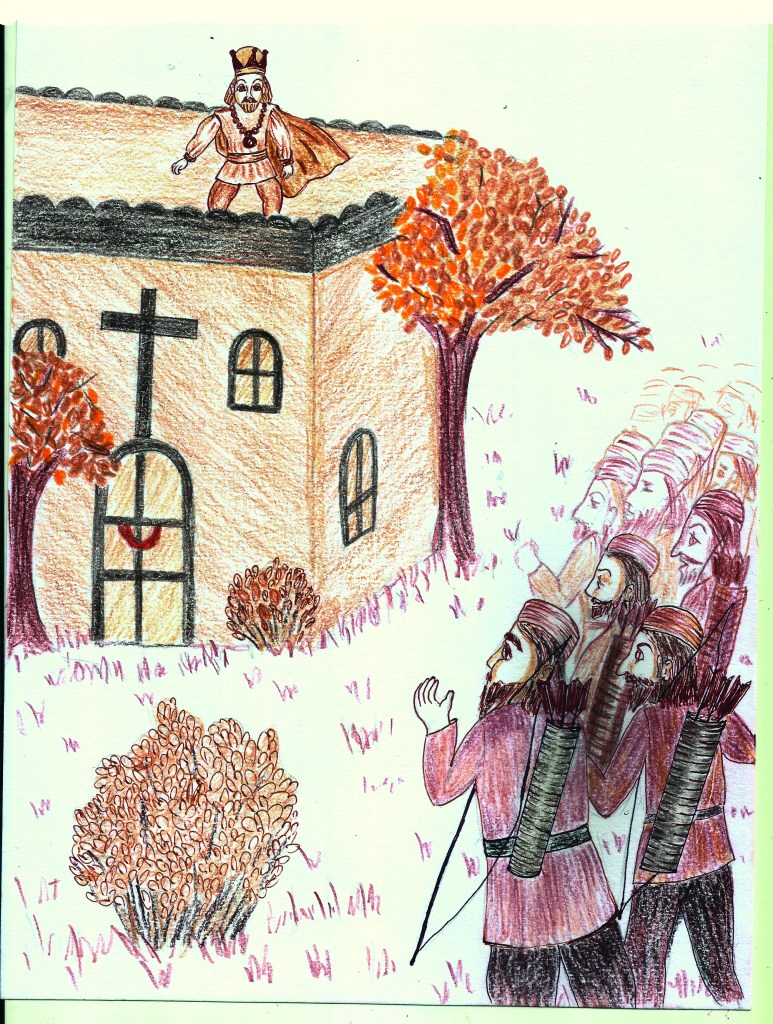


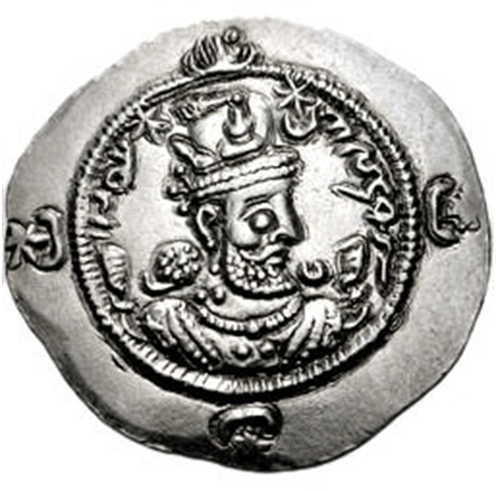
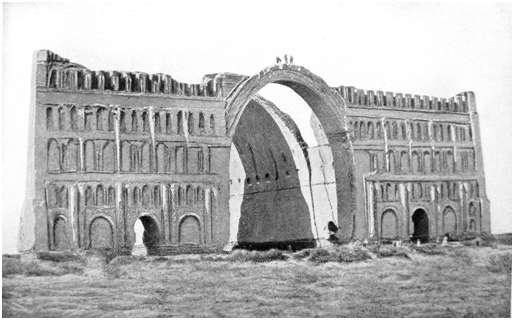

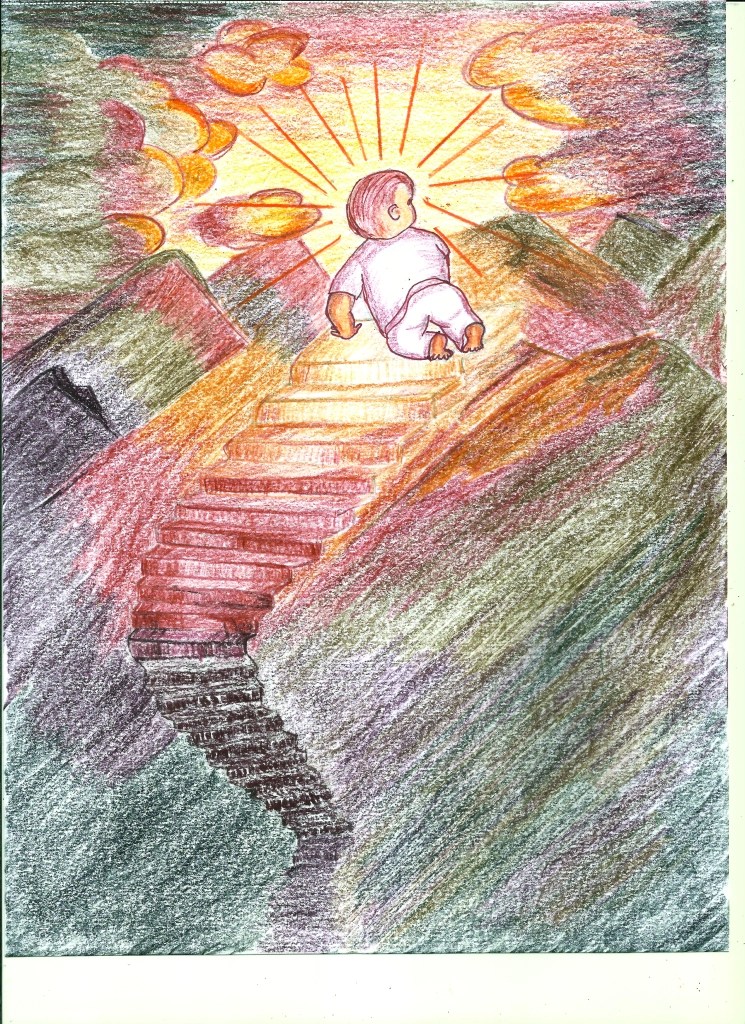
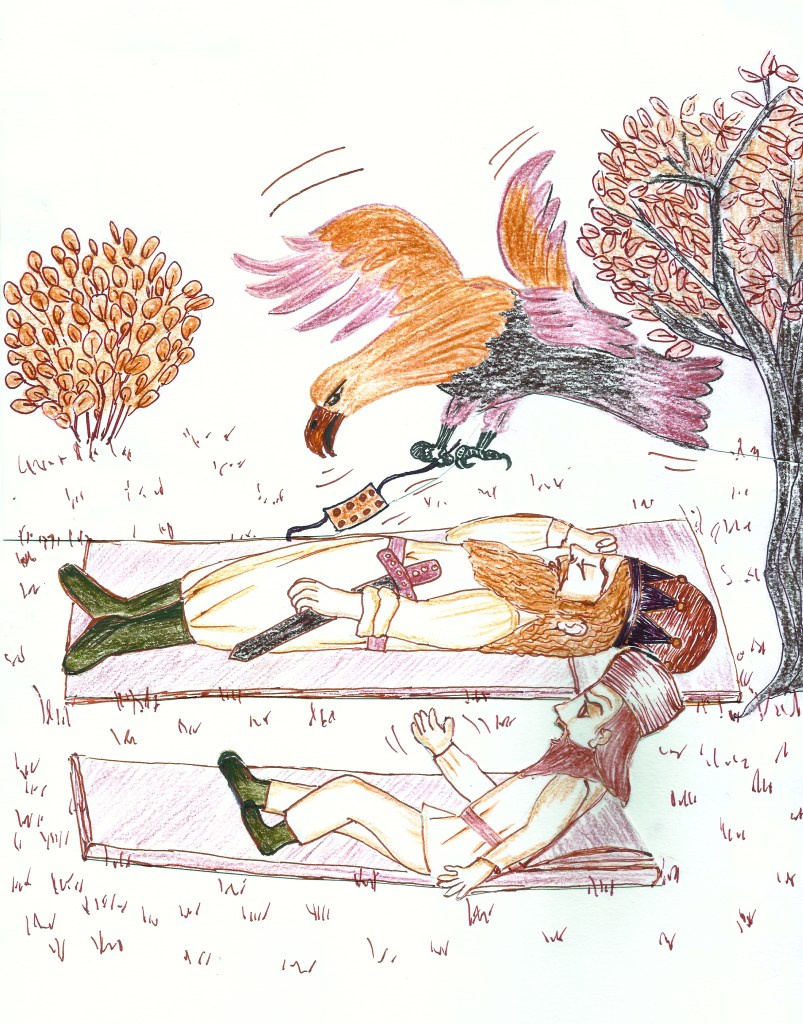

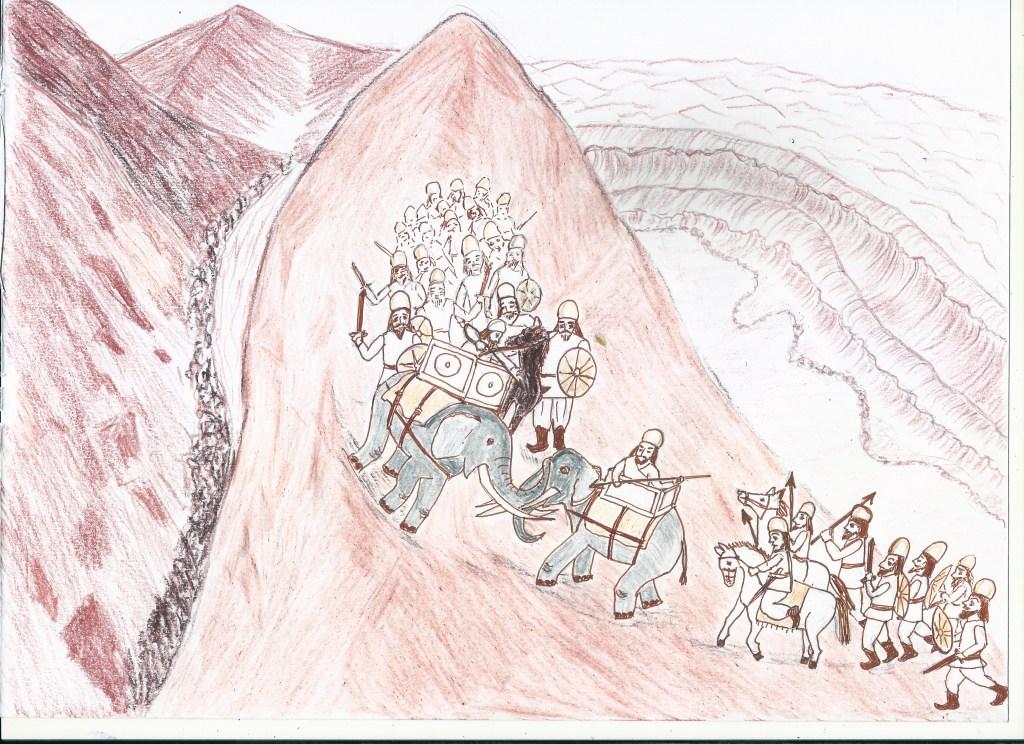

 Ramiyar Karanjia